
Shiga · Koto AreaWebsite Design in Hikone


- Regions of Shiga
- Hikone City
About Hikone City
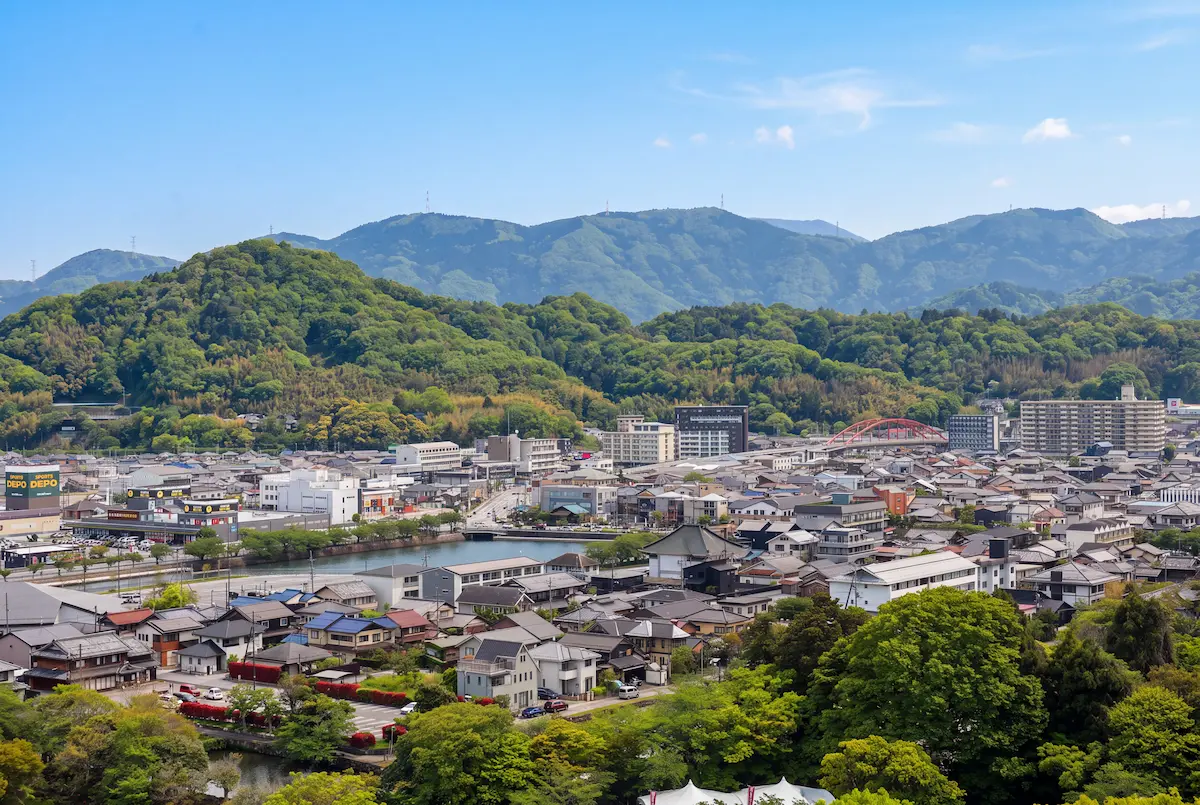
Hikone is the castle town of Hikone Castle, whose keep is a National Treasure, and has the third largest population in the prefecture. Alongside shops and inns that welcome castle visitors, traditional industries such as Hikone Butsudan altars are still carried on.
With Shiga University and the University of Shiga Prefecture, it is also a town with many students. Customers differ between the old streets around the castle and the residential areas near the station and the universities.
Sightseeing
Hikone Castle's keep is one of only five castle keeps designated as National Treasures. Next to the castle, Genkyū-en is a feudal lord's garden where you can look up at the keep across the pond.
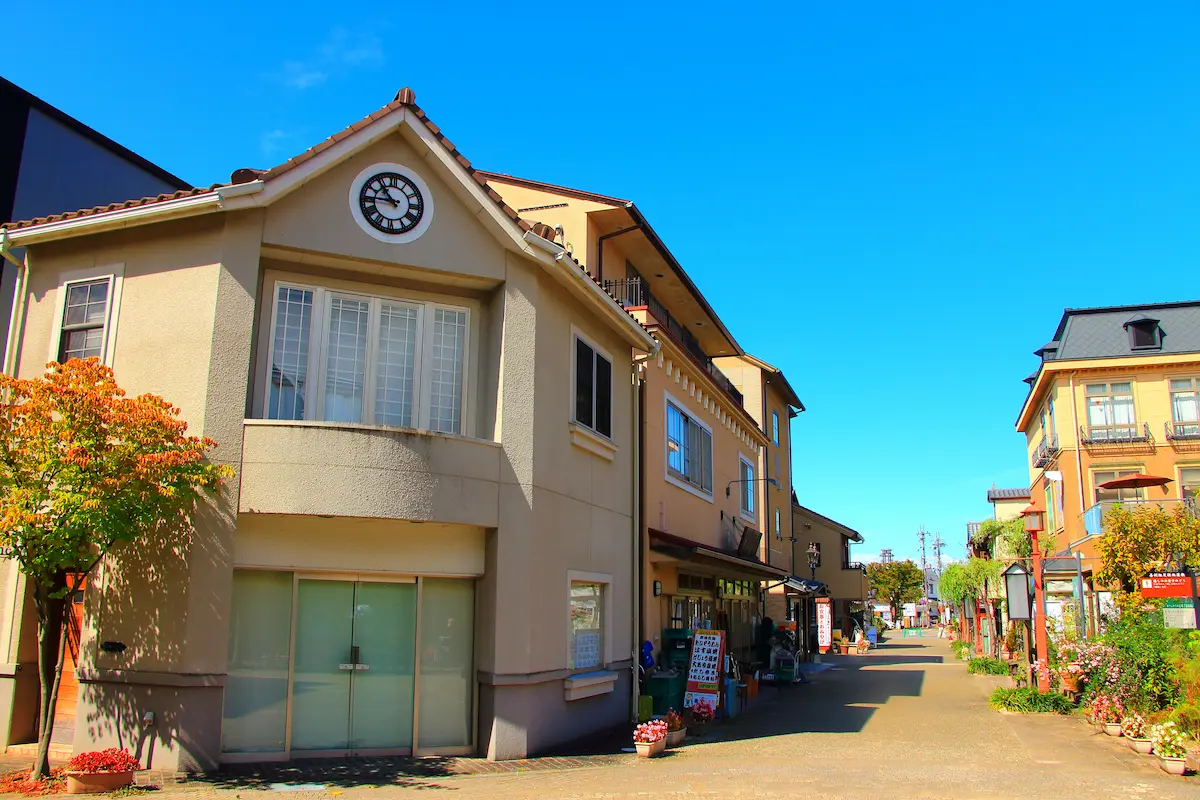
Yume-Kyōbashi Castle Road below the castle is lined with shops in townhouse style. Hikonyan, Hikone's mascot, is a favorite with castle visitors.
History
Hikone was a castle town ruled by the Ii family in the Edo period, and its street layout and old buildings remain today.
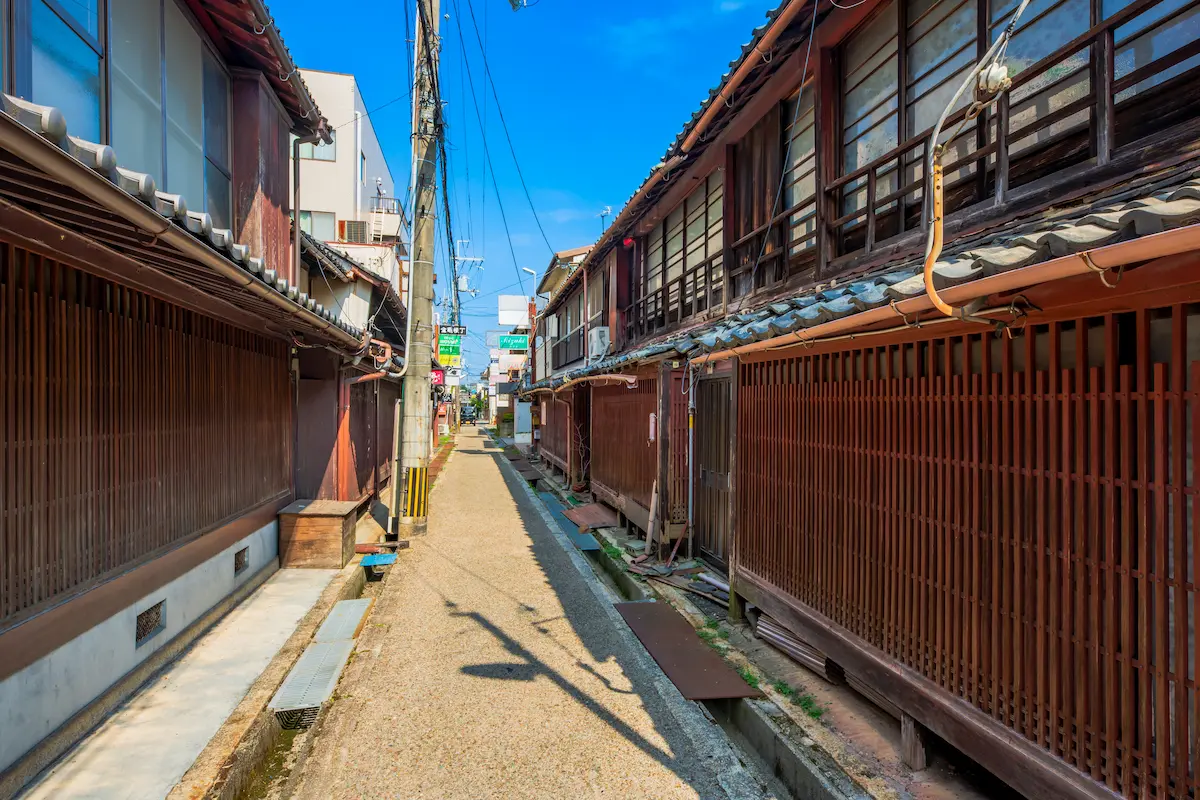
The area around Hanashōbu-dōri, lined with castle-town townhouses, is a nationally designated Important Preservation District for Groups of Traditional Buildings.
Industry
Restaurants, souvenir shops and inns cluster around the castle. The city also has factories, shops for students, and clinics and classes in residential areas.
In 1975, Hikone Butsudan became the first Buddhist altar to be designated a national Traditional Craft.
Lifestyle
According to the 2025 census (final figures), Hikone has a population of 111,549, third in the prefecture after Otsu and Kusatsu.
Near the universities there are many student apartments and shops, and households are the second smallest in the prefecture. Kyoto Station is about 50 minutes from JR Hikone Station by Special Rapid.
Seven crafts in one Hikone Butsudan
Each Hikone Butsudan is made by hand by seven kinds of artisans, known as the "seven crafts," each finishing their own parts. Seven skills come together in a single altar.
- Kijishi (woodworker) Builds the altar's wooden body
- Kūdenshi (palace builder) Assembles the miniature roofs and pillars inside
- Chōkokushi (carver) Carves the decorative pieces
- Urushinurishi (lacquerer) Applies coat after coat of lacquer
- Makieshi (maki-e artist) Paints with lacquer and decorates with gold powder
- Kinpakuoshishi (gilder) Applies the gold leaf
- Kazarikanagushi (metalsmith) Makes the decorative metal fittings
For things made by several hands, showing who does each step conveys the quality of the work. On a workshop's or artisan's website, too, we recommend showing the process with close-up photos of hands at work and a few words.
Hikone City by the Numbers
- Population
- 111,549 people 3rd in the prefecture
- Households
- 50,779 households 3rd in the prefecture
- People per household
- 2.16 people 2nd smallest in the prefecture
- Foreign residents
- 4,215 people 4th in the prefecture
For manufacturers
in the valve town
Valve making in Hikone is said to have begun around 1887 (Meiji 20), when a craftsman who made metal fittings for Buddhist altars was asked by a silk mill in Shinshū to make a steam tap. Today, makers of valves for waterworks, factories and ships, along with parts and machining companies, are concentrated in Hikone, Inukami District and Aishō. In business-to-business deals, buyers check these things on your website before they meet you.
- 01
What you can make
Let them see your product types, sizes, materials and supported standards in one list.
- 02
Equipment and skills
Show your machines, inspection equipment and specialist processes with photos and short explanations.
- 03
Quality
Summarize your inspection process and the certifications you hold.
- 04
Your people and workplace
Photos of the workplace and words from staff also bring in job applications.

Part-time job pages in a student town
Hikone is home to Shiga University, the University of Shiga Prefecture and Seisen University, and many shops and companies rely on students working part-time. Students look for jobs on their phones and also check the websites of shops they're interested in. Putting the following on your recruiting page helps them apply with confidence.
-
What the job involves
Describe a typical day and what they'll learn first, in concrete terms.
-
Pay and hours
State the hourly wage, how shifts are set, and how exam periods and long holidays are handled.
-
The workplace
Show the atmosphere with photos of the team and the shop.
-
How to apply
Provide a form they can fill in on a phone, and a contact.
As well as listing on job sites, having a recruiting page on your own website means people apply after getting to know your shop.
The castle town, and around the station and universities
Hikone has a castle town that draws people from outside, and areas around the station and universities where students and locals live. Which one your shop is in changes what your website should show first.
Castle town (Yume-Kyōbashi, Hanashōbu-dōri)
Castle visitors walk around looking for lunch and souvenirs. Many are first-time visitors, and many come from overseas.
What to show first on your website
- Directions from the castle
- Opening hours and closing days
- Information in English and other languages
Around the station and universities
Used by students, people living alone and local families. There are many shops, clinics and classes that people visit almost every day.
What to show first on your website
- Prices you can see at a glance
- Booking from a smartphone
- Car and bicycle parking
Visitors and
local customers
Shops in Hikone may serve both castle visitors and local people and students. Visitors are looking for places they can drop into near the castle.
What visitors look for
- Directions from the castle and station
- Opening hours and closing days
- Whether booking is needed
- Information in English and other languages
What locals look for
- Menu and prices
- Student deals
- Parking
- How to book
Hikone's year,
and when to update your website
In Hikone, there are times when crowds gather around the castle and times when students' routines change. Updating your information a little beforehand makes it easier for them to find you.
-
March to April
New school year
New university students start looking for shops and clinics near home. A good time to review your hours, prices and map.
-
April
Cherry blossoms at the castle
Many people come from outside to see the cherry blossoms around Hikone Castle. Shops in the castle town help by posting how busy it is and their hours.
-
Autumn
Autumn outings
More people visit the castle and Genkyū-en. Mention seasonal menus and that you're an easy stop on a walk around town.
-
December to January
Year-end and New Year
Closing days and hours often change at this time. Showing them clearly on your top page also cuts down on inquiries.
Pages in English and German,
too
Many travelers from overseas visit Hikone Castle, a National Treasure. After the castle, many look for somewhere nearby to eat or buy souvenirs.
If they can find how to get there, your hours and how to pay in English, they're more likely to choose you.
Kototsuki Design's own website is published in English and German as well as Japanese. When we build a shop's site, we also organize what overseas visitors want to check before they go: how to get there, how to book, and how to pay.

Who this is for
- Shops on Yume-Kyōbashi Castle Road or Hanashōbu-dōri that welcome visitors
- Businesses that want overseas visitors to Hikone Castle to find them
- Traditional craft workshops, such as butsudan makers, that want to show the quality of their work
- Valve and parts makers that want to show their skills to customers and future staff
- Shops and classes for students around the universities
- Businesses that want to recruit student part-timers through their own website
- Shops and companies away from the castle, such as in Inae or Minami-Hikone
What we help with in Hikone
-
Castle-town shops and inns
We set out directions from the castle and your hours so first-time visitors can follow them.
-
Traditional craft artisans
With photos and words that show the steps and skills of handwork, we convey the value of what you do.
-
Shops for students
Assuming most people view on smartphones, we make prices and location easy to find.
For meetings, we come to your shop or office anywhere in Hikone. Online meetings are fine too.
 Our work

Check your current website for free

 Website Design Plans
Putting My Heart into Every Page Mini-Site Plan
Starting at 440,000 yen
A
simple website consisting only of a homepage and blog posts
- Home Page
- Post Page
(WordPress or microCMS): Up to two posts, such as product introductions or announcements - Responsive Design: A design compatible with computers, smartphones, and tablets
- Setting Up a Contact Form
The Most Popular Plan Standard Plan
Starting at 880,000 yen
A
small- to medium-sized website consisting of a home page and about 9 additional pages
- Homepage + 9 subpages
- Post Page
(WordPress or microCMS): Up to two posts, such as product descriptions or announcements - Responsive Design: A design compatible with computers, smartphones, and tablets
- Setting Up a Contact Form
Websites Tailored to Your Needs Multifunctional Plan
Quote
Please request a quote for
multifunctional websites, such as e-commerce sites and sites with language selection features.
- E-commerce Site
- Multilingual Website
- Media Site
- Sites with Other Features
- All prices shown include tax.
- Domain and server fees are not included.
- The prices listed above are estimates. Costs can vary significantly depending on the number of pages and features, so please contact us for a consultation.
Choose by goal
Choose by tool
 Website design in Hikone
FAQ
- Can you come to us for a meeting if we're in Hikone?
- Yes. We visit businesses anywhere in Hikone, from around the castle to Inae. Seeing your shop or workshop in person often gives us ideas for photos and for how to tell your story. Online meetings are also available to suit your schedule.
- Should our website be for visitors or for locals?
- We recommend deciding based on your mix of customers. If you have plenty of both, splitting the top page into "For visitors" and "For locals" helps each find what they need.
- Can a website show work like butsudan making and other crafts?
- Yes. We show the steps involved and where the effort goes, with photos and a few words. It also helps to have a separate guide for services customers can easily request, such as repairs and cleaning.
- Are there subsidies for building a website?
- The national Small Business Sustainability Subsidy may cover website costs. Eligible costs, limits and application periods change from round to round, so please check the latest details with the Hikone Chamber of Commerce and Industry or the other offices listed at the bottom of this page.
- Can you build with either WordPress or microCMS (a headless CMS)?
- Yes, we work with both. If you want to post blog articles or news often, or plan to add features later, we usually recommend WordPress. If you don't update very often and care most about fast pages and security, we suggest microCMS, a headless CMS. We choose the best option together, based on your business and how you'll run the site day to day.
- Can you also renew a website made by another company, or help with WordPress maintenance and security?
- Yes, we'd be glad to help. We often hear things like "our site is slow," "we're worried about WordPress security," or "the person in charge left and nobody can update it anymore." We'll look at your current site together, including the WordPress version and server setup, and suggest a realistic plan for renewal or ongoing maintenance. In Hikone City, we can also come to you and check the site in person.
Subsidies you can use for a website
For small shops and businesses, the national Small Business Sustainability Subsidy may cover the cost of building a website. You apply with support from your local chamber of commerce, and the process goes like this.
-
Talk to the local office
Ask your local chamber of commerce whether you can use it, and when applications open.
-
Prepare the documents
You prepare the documents needed for the application, such as a business plan.
-
Apply
You apply after the chamber of commerce has checked your documents.
-
Check when to order
Each subsidy has its own rules on when you may place the order and pay. It's safest to ask at the office before work begins.
Where to ask in Hikone
- Hikone Chamber of Commerce and Industry
- Inae Society of Commerce and Industry
- Shiga Yorozu Support Center
Eligible costs, limits and application periods change from round to round, so please check the latest details with the office. Whether your contact is the chamber of commerce and industry or the local society of commerce depends on where your business is located.
Find your area in Shiga
Hikone is in the Koto area of Shiga.
-
Koto Area
- Hikone
- AishoComing soon
- ToyosatoComing soon
- KouraComing soon
- TagaComing soon
-
Otsu Area
-
Konan Area
-
Koka Area
- KokaComing soon
- KonanComing soon
-
Higashiomi Area
- Omihachiman
- HigashiomiComing soon
- HinoComing soon
- RyuohComing soon
-
Kohoku Area
- Nagahama
- MaibaraComing soon
-
Takashima Area
- TakashimaComing soon
 Contact Form