
Shiga · Higashiomi AreaWebsite Design in Omihachiman



- Regions of Shiga
- Omihachiman City
About Omihachiman City
Omihachiman is the home town of the Ōmi merchants. Around the Hachiman-bori canal, white-walled storehouses and merchant houses still stand. Besides shops and inns for people exploring the old town, there are many long-running businesses selling Ōmi beef, Japanese sweets and more.
Since merging with Azuchi in 2010, the city also includes the Azuchi Castle ruins and Okishima, an island in Lake Biwa. New housing spreads out around the station, so old streets and new neighborhoods sit side by side in one city.
History and waterside
In the Azuchi-Momoyama period, Toyotomi Hidetsugu built Hachimanyama Castle and laid out a castle town. The Hachiman-bori canal, linked to Lake Biwa, carried goods by boat and supported the town's trade.
The merchant streets around the canal were designated a national Important Preservation District for Groups of Traditional Buildings in 1991.
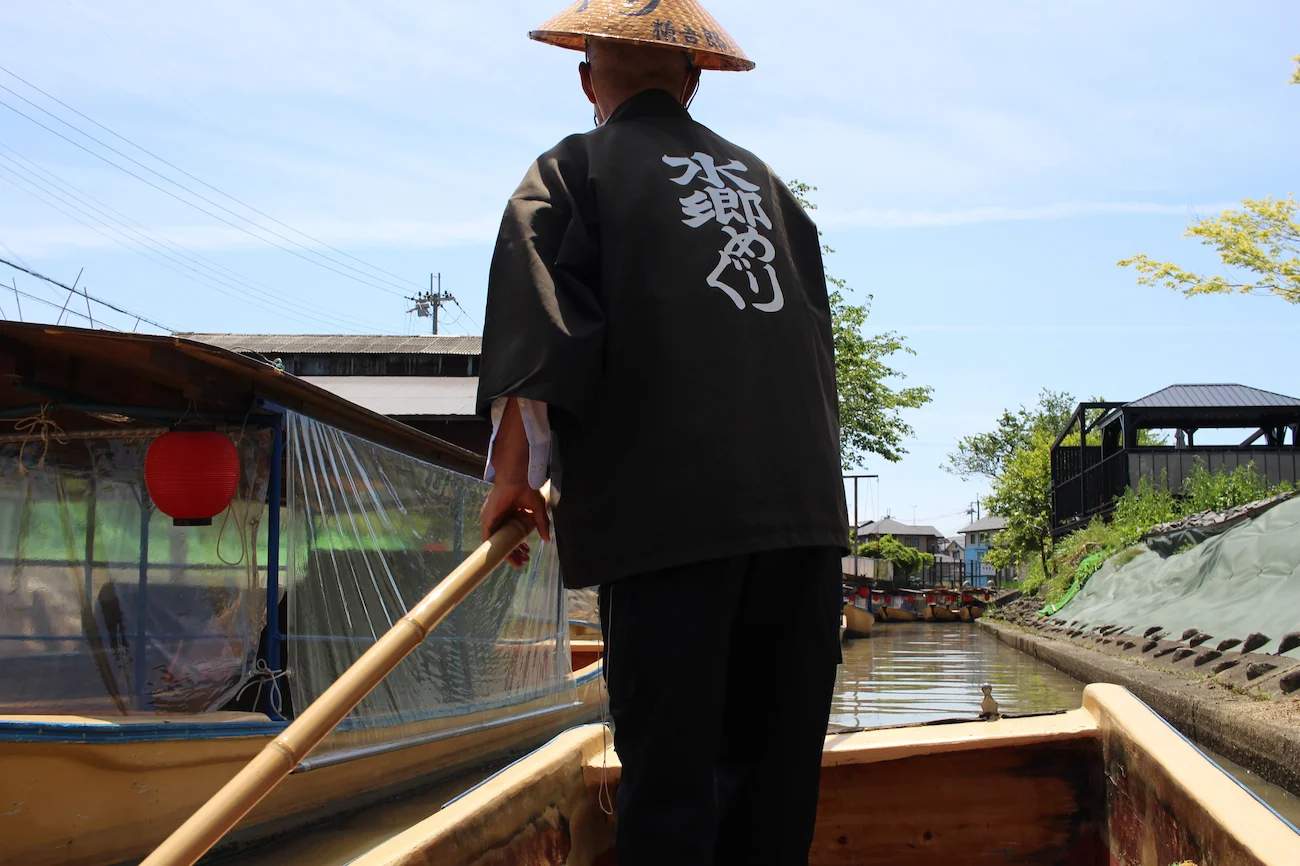
To the north spread waterside villages where reed beds and waterways intertwine, and visitors can tour them in hand-rowed boats. In 2006, "The Waterside of Ōmihachiman" became Japan's first Important Cultural Landscape.
Sightseeing
The area around the Hachiman-bori canal and Himure Hachimangū shrine is a favorite for strolling and is often used in period dramas. Western-style buildings designed by William Merrell Vories, who came from America, remain all over town.
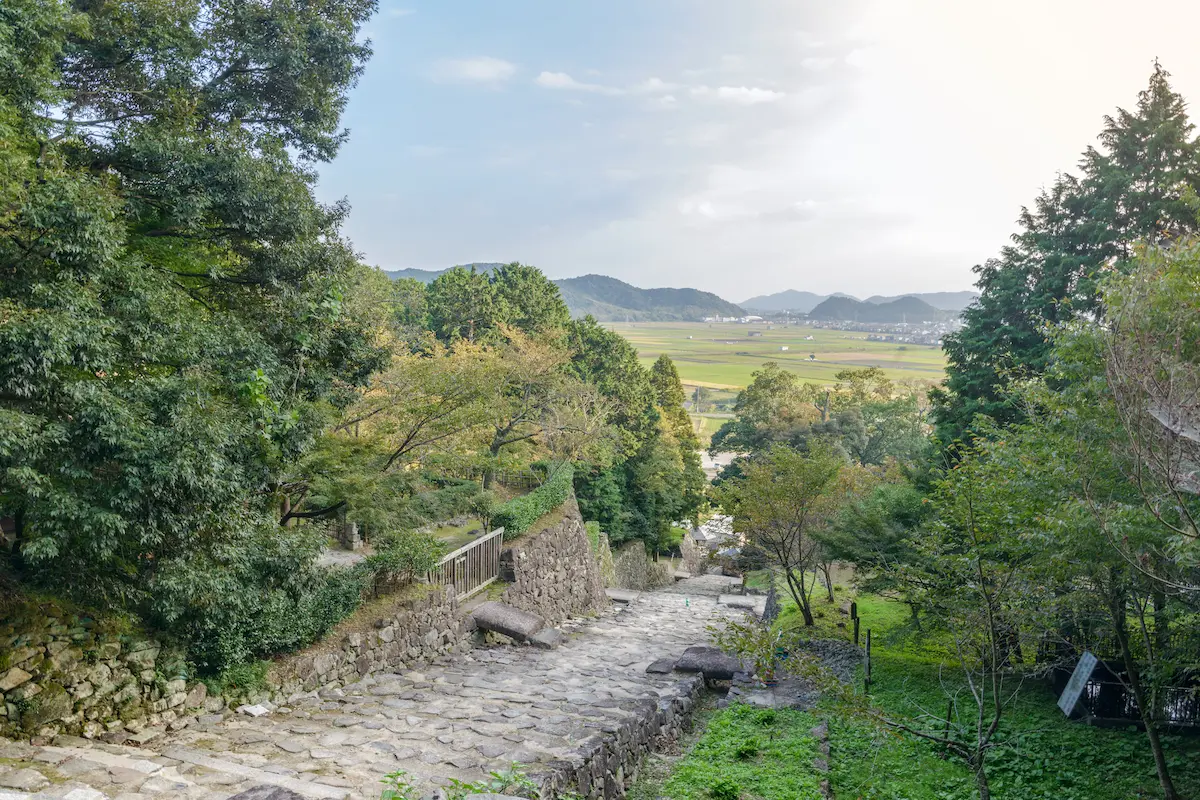
La Collina Omihachiman, run by the confectioner Taneya, draws many visitors from outside the prefecture. Some also head to the Azuchi Castle ruins or to Okishima, an island where people still live.
Industry
There are many shops selling local specialties such as Japanese sweets, Ōmi beef and red konnyaku, as well as restaurants and inns that serve both visitors and locals.
The city also has factories, plus clinics and classes in residential areas. Around the lake, rice farming and fishing continue.
Life
According to the 2025 census (final figures), Omihachiman has a population of 79,546. There are 2,043 foreign residents, 556 more than five years earlier.
Kyoto Station is about 35 minutes from JR Omi-Hachiman Station by Special Rapid. Housing spreads mainly south of the station, and some residents commute to Kyoto or Osaka.
Omihachiman specialties
Omihachiman has specialties that people come from outside the city to buy. Showing what they are and where to buy them helps customers from far away choose you.
- Red konnyaku Konnyaku dyed red with iron, which keeps its color even when simmered
- Decchi yōkan Lightly sweet bean jelly, wrapped in bamboo sheath and steamed
- Ōmi beef Shiga's Japanese Black beef, served at restaurants and butchers
If you sell local specialties, include not only the story and how they're made, but also shelf life, takeaway and how to order by mail. Then people can order before or after their trip, too.
Four hundred years of a merchant town
Born as a castle town, Omihachiman flourished as a merchant town and today carefully preserves its old streets and waterside.
-
1585
Hachimanyama Castle and its town
Toyotomi Hidetsugu built Hachimanyama Castle, opened the Hachiman-bori canal to Lake Biwa, and created a town of merchants.
-
Edo period
Ōmi merchants across Japan
Even after the castle was gone, the town thrived on trade, and its merchants opened shops all over the country.
-
1905
Vories arrives
Vories came to teach English, later started an architecture practice, and left many Western-style buildings in the town.
-
1991
Protecting the streets
The merchant streets around the canal were designated a national Important Preservation District for Groups of Traditional Buildings.
-
2006
Japan's first cultural landscape
"The Waterside of Ōmihachiman" became Japan's first Important Cultural Landscape.
-
2010
Joining with Azuchi
The merger with Azuchi brought the Azuchi Castle ruins and Okishima into Omihachiman.
Omihachiman City by the Numbers
- Population
- 79,546 people Down 1,576 in five years
- Households
- 32,320 households
- Average age
- 47.4 Prefecture: 47.2
- Foreign residents
- 2,043 people Up 556 in five years
A shop website
built on "sanpō-yoshi"
"Sanpō-yoshi", handed down as a principle of the Ōmi merchants, means that good business is good for the seller, good for the buyer and good for society. A website built with these three in mind becomes something you can rely on for years.
- 01
Good for the seller
Easy to update, with fewer inquiries and booking hassles, so it lightens your load.
- 02
Good for the buyer
Customers get straight to what they want to know: prices, opening hours, how to get there.
- 03
Good for society
Share the town's history and your ties to the community, and give visitors and locals information they'll appreciate.

What a long-established shop's
website should include
This town of Ōmi merchants has many shops and companies that have been handed down for generations. Having lasted so long is in itself a reason to choose you. We recommend including the following on your website.
-
Your history
Show the year you were founded and what has been handed down, with a timeline and photos.
-
What hasn't changed
Describe the flavors, skills and ingredients you've kept to, in a few words.
-
The current generation
The face and words of today's owner put first-time visitors at ease.
-
How to buy and order
Explain how to buy in store, and how to order gifts or have items delivered.
A long-established shop's website works best when it shows its long history with pride rather than hiding its age. Then we tidy the text and photos so today's customers find it easy to read.
Around the canal, and around the station
Omihachiman has the area around the Hachiman-bori canal, where people come to stroll, and the area around the station, where daily life happens. Which one your shop is in changes what your website should show first.
Hachiman-bori and the old town
People come from outside the city and from abroad for the old streets and waterside tours. Many look for somewhere to eat or buy souvenirs as they walk around.
What to show first on your website
- Directions from the canal and the station
- Opening hours and closing days
- Information in English and other languages
Around the station and residential areas
Local families and people commuting to Kyoto or Osaka live here. There are many shops, clinics and classes that people visit almost every day.
What to show first on your website
- Menu and prices
- How to book
- Parking
Visitors and
local customers
Shops in Omihachiman often serve both visitors strolling the town and local people. The longer a shop has been around, the more its history and care give customers a reason to choose it that no one else has.
What visitors look for
- Directions from the canal and station
- Opening hours and closing days
- Whether booking is needed
- Takeaway and delivery
What locals look for
- Menu and prices
- How to order gifts
- Parking
- How to book
Omihachiman's year,
and when to update your website
In Omihachiman, people gather for festivals and seasonal scenery at certain times of year. Updating your information a little beforehand makes it easier for them to find you.
-
March
Sagichō Festival
A town-wide fire festival is held around Himure Hachimangū. Let visitors know your hours and how crowded it gets on festival days.
-
April
Hachiman Festival
A spring festival where huge torches are set alight. People come from outside the city, so review your directions and parking information.
-
Spring to early summer
Waterside tours and strolling
More people take boat tours of the waterside and walk along the canal. Use a map and photos to show you're an easy stop along the way.
-
December to January
Year-end and New Year
Closing days and hours often change at this time. Post the order deadlines for sweets and gifts early, too.
Pages in English and German,
too
The canal-side streets and waterside tours also draw travelers from overseas. Many look for somewhere nearby to eat or buy souvenirs as they walk the old town.
If they can find how to get there, your hours and how to pay in English, they're more likely to choose you.
Kototsuki Design's own website is published in English and German as well as Japanese. When we build a shop's site, we also organize what overseas visitors want to check before they go: how to get there, how to book, and how to pay.

Who this is for
- Shops and inns in the old town around the canal that welcome visitors
- Long-established makers of sweets, Ōmi beef and more who want to share their history
- Businesses that want overseas visitors on the waterside tours to find them
- Shops that want to take gift and mail orders through their website
- Shops and classes around the station or in Azuchi that serve local people
What we help with in Omihachiman
-
Shops and inns in the old town
We set out directions from the canal and your hours so first-time visitors can follow them.
-
Telling a long-established shop's story
We carefully convey the flavors, skills and history handed down over generations, in words and photos.
-
Gifts and mail orders
From product introductions to how to order, we make it easy for faraway customers to buy.
For meetings, we come to your shop or office anywhere in Omihachiman. Online meetings are fine too.
 Our work
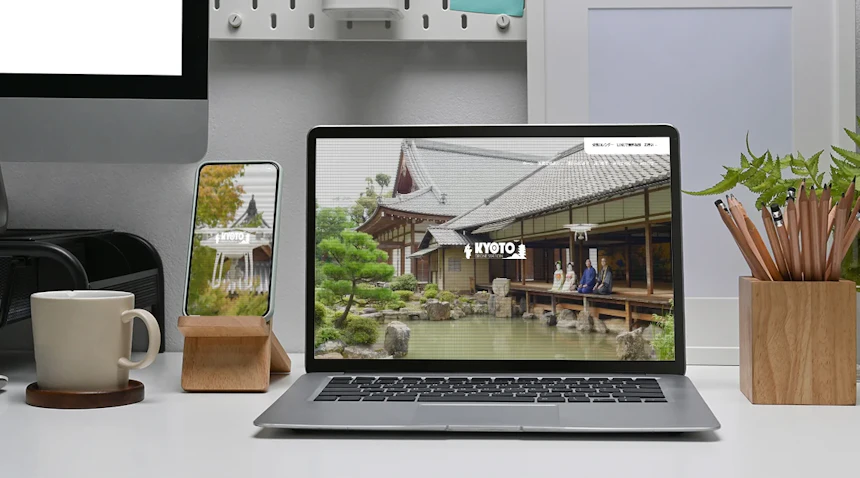
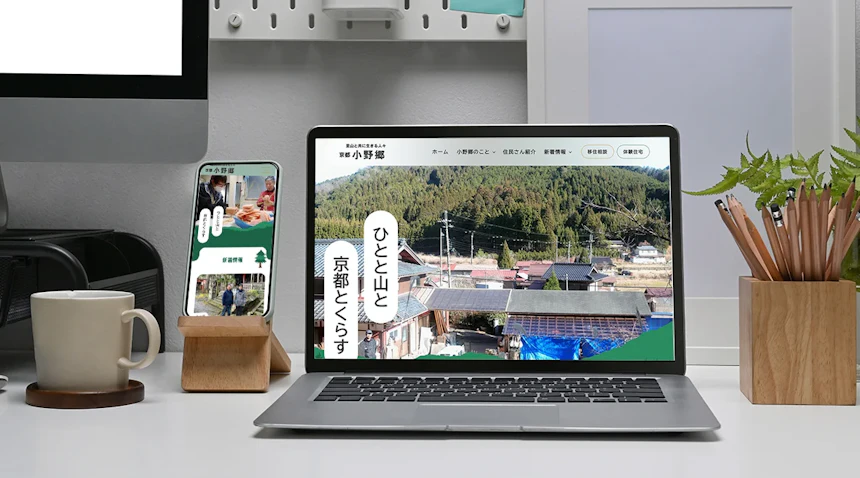
Check your current website for free

 Website Design Plans
Putting My Heart into Every Page Mini-Site Plan
Starting at 440,000 yen
A
simple website consisting only of a homepage and blog posts
- Home Page
- Post Page
(WordPress or microCMS): Up to two posts, such as product introductions or announcements - Responsive Design: A design compatible with computers, smartphones, and tablets
- Setting Up a Contact Form
The Most Popular Plan Standard Plan
Starting at 880,000 yen
A
small- to medium-sized website consisting of a home page and about 9 additional pages
- Homepage + 9 subpages
- Post Page
(WordPress or microCMS): Up to two posts, such as product descriptions or announcements - Responsive Design: A design compatible with computers, smartphones, and tablets
- Setting Up a Contact Form
Websites Tailored to Your Needs Multifunctional Plan
Quote
Please request a quote for
multifunctional websites, such as e-commerce sites and sites with language selection features.
- E-commerce Site
- Multilingual Website
- Media Site
- Sites with Other Features
- All prices shown include tax.
- Domain and server fees are not included.
- The prices listed above are estimates. Costs can vary significantly depending on the number of pages and features, so please contact us for a consultation.
Choose by goal
Choose by tool
 Website design in Omihachiman
FAQ
- Can you come to us for a meeting if we're in Omihachiman?
- Yes. We visit businesses anywhere in Omihachiman, from the old town and the station area to Azuchi. Seeing your shop in person often gives us ideas for photos and for how to tell your story. Online meetings are also available to suit your schedule.
- We're a long-established shop. Will our website look old-fashioned?
- Having lasted a long time is a great strength in itself. We keep your history and what you've inherited front and center, while tidying the type and photos so the page is easy for today's customers to read.
- Can we take orders for sweets and other products through the website?
- Yes. We'll suggest an approach that fits how you take orders now and how many items you sell, such as an order form or a link to an online shop service.
- Are there subsidies for building a website?
- The national Small Business Sustainability Subsidy may cover website costs. Eligible costs, limits and application periods change from round to round, so please check the latest details with the Omihachiman Chamber of Commerce and Industry or the other offices listed at the bottom of this page.
- Can you build with either WordPress or microCMS (a headless CMS)?
- Yes, we work with both. If you want to post blog articles or news often, or plan to add features later, we usually recommend WordPress. If you don't update very often and care most about fast pages and security, we suggest microCMS, a headless CMS. We choose the best option together, based on your business and how you'll run the site day to day.
- Can you also renew a website made by another company, or help with WordPress maintenance and security?
- Yes, we'd be glad to help. We often hear things like "our site is slow," "we're worried about WordPress security," or "the person in charge left and nobody can update it anymore." We'll look at your current site together, including the WordPress version and server setup, and suggest a realistic plan for renewal or ongoing maintenance. In Omihachiman City, we can also come to you and check the site in person.
Subsidies you can use for a website
For small shops and businesses, the national Small Business Sustainability Subsidy may cover the cost of building a website. You apply with support from your local chamber of commerce, and the process goes like this.
-
Talk to the local office
Ask your local chamber of commerce whether you can use it, and when applications open.
-
Prepare the documents
You prepare the documents needed for the application, such as a business plan.
-
Apply
You apply after the chamber of commerce has checked your documents.
-
Check when to order
Each subsidy has its own rules on when you may place the order and pay. It's safest to ask at the office before work begins.
Where to ask in Omihachiman
- Omihachiman Chamber of Commerce and Industry
- Azuchi Society of Commerce and Industry
- Shiga Yorozu Support Center
Eligible costs, limits and application periods change from round to round, so please check the latest details with the office. Whether your contact is the chamber of commerce and industry or the local society of commerce depends on where your business is located.
Find your area in Shiga
Omihachiman is in the Higashiomi area of Shiga.
-
Higashiomi Area
- Omihachiman
- HigashiomiComing soon
- HinoComing soon
- RyuohComing soon
-
Otsu Area
-
Konan Area
-
Koka Area
- KokaComing soon
- KonanComing soon
-
Koto Area
- Hikone
- AishoComing soon
- ToyosatoComing soon
- KouraComing soon
- TagaComing soon
-
Kohoku Area
- Nagahama
- MaibaraComing soon
-
Takashima Area
- TakashimaComing soon
 Contact Form