
Hello. This is Lake and Moon Design.
To those of you currently running a website on WordPress: “The site seems to be getting a little slower,” or “Every time I see security news, I worry whether we’re really safe.” When we consult with clients in Shiga about their websites, we often hear these kinds of “minor concerns” about their tools from people who are already using WordPress.
First, let me share my honest conclusion as a professional. In short, migrating from WordPress to microCMS is “unnecessary” for most companies. There’s no need to force a fundamental change to a system you’re already comfortable with.
However, if you’re hitting a wall with page load speeds, want to overhaul your security architecture, or aim to streamline your operational workflows—and any of these apply to you—then migrating to microCMS will be an excellent investment.
In this post, I’ll lay everything out on the table—from a “YES/NO Score Assessment” for those on the fence about migrating to the actual “costs, timeline, and detailed steps.” If you’re wondering, “What is microCMS in the first place?” be sure to check out this microCMS overview article as well.
For a general overview of what microCMS is, please also check out this microCMS summary article
Should You Migrate? “1-Minute Score Assessment”
This is a self-assessment to help you decide “what’s best for our company.” Count the number of items that apply to you.
◯ Items to Consider for Migration (1 point per item)
- □ Pages take more than 3 seconds to load, and you’re concerned about customer bounce rates
- □ You haven’t updated plugins or the core software for over six months, and this makes you uneasy
- □ You want to pursue a more flexible, high-quality design that isn’t dependent on specific templates
- □ You update content frequently, and the sluggish admin interface is a source of stress
- □ There were signs of external attacks (such as login attempts)
- □ I’d rather spend my time creating and publishing content than maintaining the site
Diagnosis Results
- 1–2 points: No changes needed. Continue using your
current website. With the right settings, it can still be improved. - 3–4 points: Time
to consider improvements or migration Your current system is beginning to reach its limits. We recommend either partial upgrades or considering a migration. - 5 points or more: Migration recommended
. By migrating to microCMS, you’ll achieve surprisingly streamlined and secure operations.
Conversely, you don’t need to migrate if you fit these criteria
Even if your score is high, continuing to use WordPress might be the right choice if any of the following apply to you:
- Low update frequency: You update only a few times
a month and have no major complaints about your current setup. - You have no issues with site speed
You don’t feel stressed by your site’s loading speed.
- Cost is
a priority You want to keep costs as low as possible and easily change the design. - You want
to handle everything in-house You want to add features—such as plugins—on your own without specialized knowledge.
The Difference Between WordPress and microCMS
Let’s compare how each works by using buildings as an analogy.
Comparison Criteria | WordPress (A Versatile Single-Family Home) | microCMS (Backyard and Showroom) |
|---|---|---|
Concept | Products, checkout, and inventory—all under one roof. | Separates the “back end” where data is stored from the “front end” where it’s displayed. |
Strengths | Versatility that lets you handle anything right on the spot. | The simple structure allows for smooth, unimpeded movement. |
Maintenance | Continuously inspect the keys and facilities throughout the entire building. | The interior is the interior; the exterior is the exterior. We manage each independently. |
Initial Cost | Since the configuration is familiar, it’s easy to get started. | “Design” is necessary to achieve ideal operations. |
Estimated “Cost” and “Duration”
Here are Lake and Moon Design’s actual estimates to answer the question, “How much will it cost, and when will it be finished?”
- Small-scale sites (a few pages): Approximately 400,000 to 600,000 yen
- Medium-sized sites (including content migration): Approximately 800,000–1,500,000 yen
- Large-scale, high-functionality sites: 1.5 million yen and up
Production Time: Approximately 2 to 6 months
We don’t simply transfer data.
Just as when “building a new house,” we prioritize creating a “user-friendly” experience that allows you to continue publishing content stress-free for years to come.
Migration Steps (6 Phases)
Migrating a website is similar to building a house. You lay a solid
foundation, erect the pillars, and create a comfortable living space. In website development, we proceed with the utmost care, following the steps outlined below.
① Diagnosis and Inventory of the Current Situation (Soil Survey)
First, we thoroughly review all the content on your current WordPress site.
Sorting Articles
Which of the past posts should really be migrated? We organize unnecessary information to streamline the site.
Understanding the Structure
We’ll visualize the information that makes up the current site—including categories, tags, and custom fields.
② Content Redesign (Blueprint)
microCMS does not have a “body text field” by default.
Schema Design
We’ll define each field—such as “Title,” “Body,” “Photo,” and “Post Date”—one by one.
Customizing the Administration Interface
At this stage, we design a “dedicated posting screen” to ensure users don’t get lost. This is the core component that will determine the future user experience.
③ Environment Setup (Foundation Work)
Based on the design blueprint, we’ll create the data interface (API).
API Implementation
We implement the designed fields within microCMS.
Permissions and Security Configuration
We’ll reinforce backend security by defining the scope of access for each editor and configuring preview settings.
④ Front-End Development (Framework Setup)
At this stage, we build the new “front-end interface” that customers will see.
Implementation of the Latest Technologies
Using technologies such as Next.js, we write code to ensure pages load instantly.
Design Refinement
We fine-tune the user experience, ensuring readability on smartphones and making buttons easy to press.
⑤ Data Migration
Engineers will use specialized programs to carefully migrate the data.
Creating a Conversion Program
We convert WordPress data into a format that microCMS can understand and import it in bulk. Since this is not a manual process, we can accurately transfer even several thousand records.
Image Optimization
Photos are transferred to the microCMS server and converted to next-generation formats (such as WebP) for faster loading.
⑥ Final Testing and Launch (Completion)
Redirect Configuration (Important)
This is the lifeline of SEO. We carefully configure redirects to ensure search engine rankings are carried over from the old WordPress URLs to the new ones.
Functionality Testing
For more details, please see the tutorial “Migrating Content from WordPress to microCMS” on the official microCMS blog.
Common “Failure” Scenarios in microCMS Migration
We’ll also be honest about cases where things don’t go as planned.
- Deciding
Based Solely on “Trends” Content contributors may struggle to adapt to the new system, causing content publication to grind to a halt. - Lack
of an Engineer Even if you want to make major design changes on your own after launch, you won’t be able to do so if you can’t write code.
If you want to “handle everything on your own and continue customizing easily,” WordPress might be the better choice for you.
Summary: For Those Who Are Undecided
WordPress or microCMS?
This isn’t a question of “which is better,” but rather “which gives you more freedom right now.”
For most companies, the status quo is sufficient. However, for those with the ambition to “build even more trust” or “deliver an authentic brand experience,” microCMS will be a strong ally supporting that future.
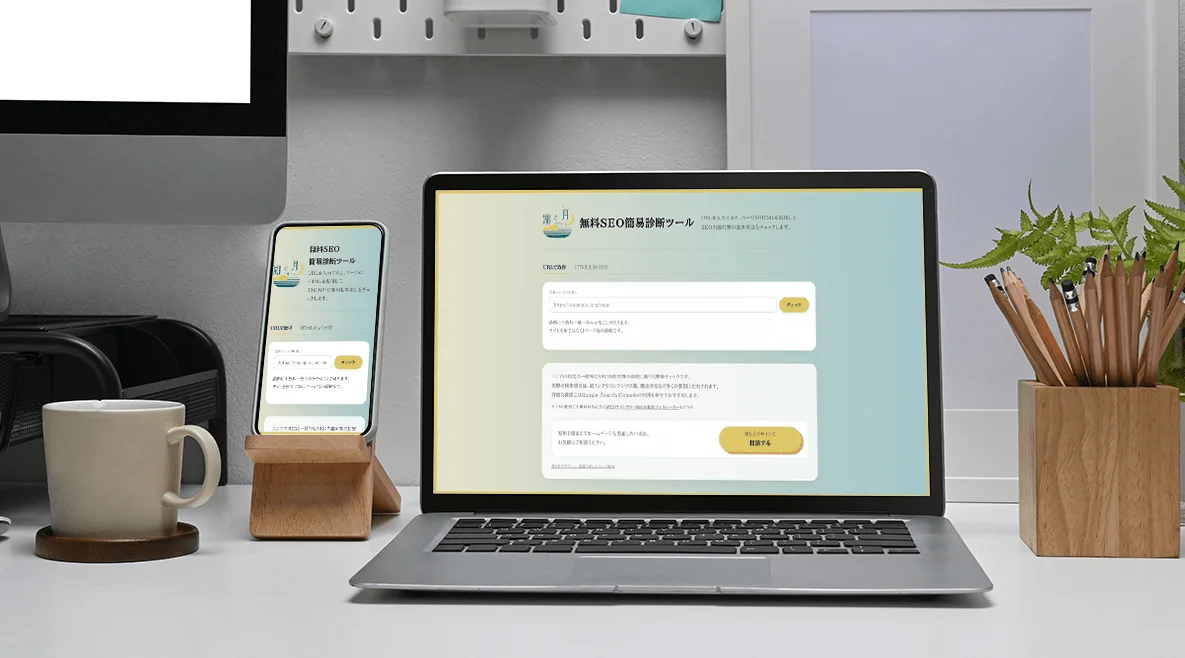
If you’re having trouble deciding which one is right for your company, let’s start by assessing the current state of your website together. Whether you’ve found issues using an SEO diagnostic tool or not, please feel free to contact us.
 Contact Form


 Related Articles