
Hello. This is Lake and Moon Design.
“I went to all the trouble of creating an e-commerce site, but it’s not getting any traffic.”
“I’m trying my best with social media, but I don’t feel like it’s leading to sales.”
We hear these kinds of concerns all over Shiga. But when we dig into the reasons why, the answer is actually quite simple.
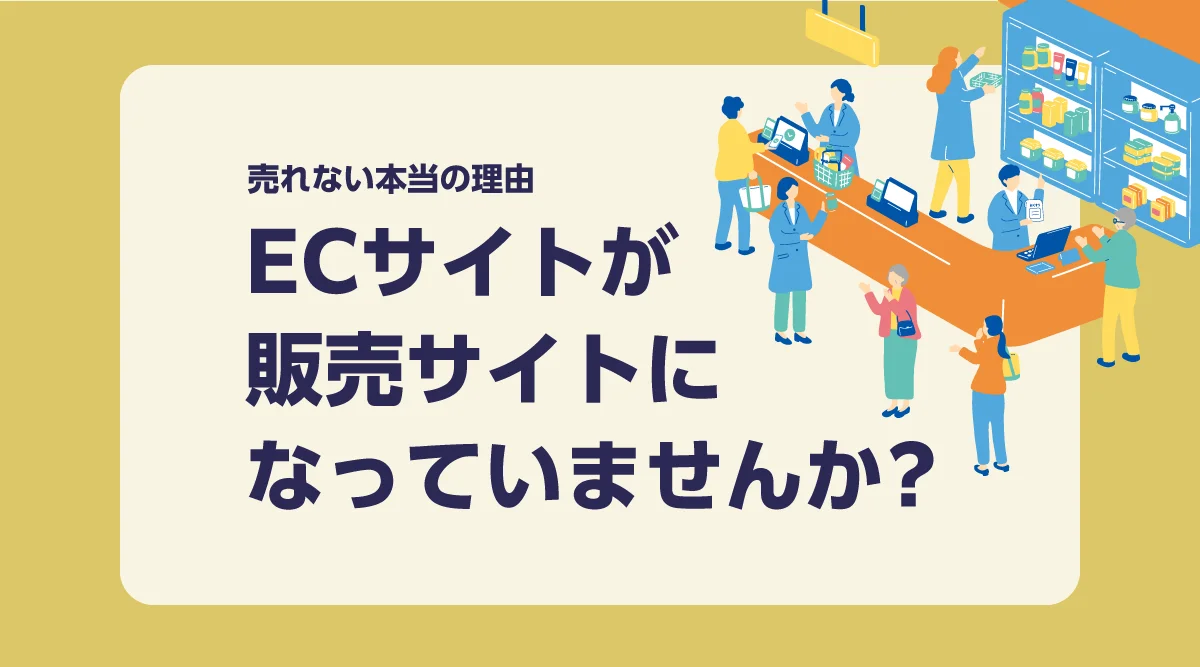
Has your e-commerce site become nothing more than a “sales site”?
Browse products, add them to your cart, and pay. Sure, the system is in place, but all you have there is a “cold, impersonal checkout.”
In this post, I’d like to share some small but important tips on how to turn your e-commerce site into more than just a convenient tool—and into a place where a “great relationship” between you and your customers can begin.
We also have a summary article on e-commerce sites, so please feel free to check it out as well.
An e-commerce site is not a sales system

First, let’s start by changing how we refer to it. An e-commerce site is not a sales system. It’s a “place where brands and customers deepen and nurture their relationship.”
It’s not just a place for administrative tasks like a “sales site”; it’s the very time itself when you and your customers meet and gradually grow to like each other. Just by reframing it this way, the words you use on your site and the photos you choose will naturally change.
It’s that feeling you get when you walk into a small shop on a street corner in Shiga—when your heart suddenly settles, or you feel at ease after sensing the shop owner’s warmth. Rather than simply handling the “moment of purchase,” it’s about gently nurturing the feelings that lead up to the point where they “want to buy.” I believe that’s the most important tip when opening a store online.
Why do stores end up becoming mere sales sites?
Why do websites we’ve worked so hard to create end up becoming nothing more than “sales sites”? It may be less a matter of a lack of information and more a lack of “context.”
Even if “numbers” like sizes and prices are listed, the story behind why they came to be isn’t visible. Or perhaps the faces of the creators and the “scent of daily life” they cherish don’t come through. A site where these “vibes” are missing looks to customers like “it doesn’t matter where I buy it.”
When the only criteria for decision-making are “low price” or “speed,” the care and attention you’ve put into your products will be swallowed up by the tide of massive shopping malls. That is the “mere sales site” scenario we want to avoid at all costs.
E-commerce is a tool for nurturing relationships with your customers.
There’s one thing I’d like to emphasize: No matter how impressive your e-commerce site may be, if it isn’t built on the foundation of “great products and a great store,” it simply won’t last.
An e-commerce site isn’t magic. Ultimately, it’s a tool that leverages digital technology to nurture the relationship between your business—and the values you hold dear—and your customers.
Take, for example, the warmth a Shiga artisan shows when sincerely engaging with each and every customer. Or the almost stubborn dedication to craftsmanship. It’s precisely because of that “real-world warmth” that the words conveyed through a screen carry such persuasive power.
Rather than separating the physical store from the online store, they form a single brand. That pleasant cycle is precisely the goal we aim to achieve.
Imagine two “stores.”
Even if they carry similar products, the results can be completely different depending on how they’re designed.
- Store A: A “sales site”
where products are displayed like a catalog. Customers think, “It’s the same no matter where I buy it,” so they’re always comparing prices with others. - Mr. B’s store: A “space for experiences”
where the background and reasoning behind the products are carefully communicated. “I want to buy from this person”—such targeted purchases increase, and before you know it, a community of fans has gathered.
In reality, I’m often consulted by people who say, “It’s a great product, but for some reason, it just isn’t selling.” When we look into the cause, in almost every case, the problem isn’t with the “appeal of the product” itself—it’s simply that the “design of how the message is conveyed” isn’t effective.
In fact, the moment you move beyond being “just a sales site,” you’ll start hearing comments like, “Even if it’s expensive, I want to buy from you”—rather than facing price competition. This difference isn’t about having more information; it’s about whether you’ve successfully designed “meaning.”
5 Key Principles to Avoid Creating “Just Another Sales Site”
So, how exactly can you transform your site into an “asset” in your relationship with customers? Here are the five key perspectives we prioritize.
① Focus on “reasons,” not just stories.
People often say “stories are important,” but they don’t have to be glamorous, feel-good tales. What matters is providing, in your own words, a “reason to choose” that your customers can truly understand and accept. That’s what gives them the greatest peace of mind.
② Create the reassurance that allows customers to “buy with confidence.”
Customers can’t touch products online. That’s exactly why we gently alleviate their concerns with detailed selection guides and scenes showing the products in everyday use. On your website, we recreate a customer experience focused on “helping them understand” rather than just “making a sale.”
③ Add a “context of daily life” to your products.
Instead of simply presenting a product on its own, we propose it alongside a scene that shows “how it fits into daily life.” We create an experience that allows customers to imagine the small moments of joy they’ll experience after purchasing it.
④ “After the purchase” is just the beginning.
It’s the time after the purchase is complete that truly defines a brand’s caliber—from heartfelt messages to how easily the box opens upon delivery. This “afterglow” is what keeps customers coming back.
⑤ Build trust, one step at a time.
We’ll continue to share your thoughts through blogs and columns. By transforming the site into more than just a storefront—but a “space” that’s also engaging to read—we’ll simultaneously foster new connections and build deep trust.
Social Media Is the “Starting Point”; E-commerce Is the “Confirmation”
Many people are putting a lot of effort into social media these days, but it’s less stressful if you think of their roles separately.
- Social Media: A place for “opportunities” to make connections
(ephemeral information) - E-commerce: A place for “conviction” that
deepens relationships (stored information)
Focusing solely on social media is like having a “lively street vendor but an empty store inside.” When someone who’s become interested through social media visits your site—as if stepping through the store’s noren curtain—if there aren’t compelling reasons “stored” there to convince them, they’ll simply leave.
Let’s carefully design this handoff from “opportunity” to “conviction.”
Summary: Let’s build your “store” together for the future.
An e-commerce site isn’t just a convenient tool. It’s a “space for customer service” where you welcome guests, and it’s the “brand itself” that conveys your business philosophy.
What’s important is carefully building up “reasons to want to buy” before simply setting up the “ability to buy.” Before we even discuss the “mechanics” of the system, let’s work together to identify why customers choose your business and lay the foundation from the ground up. That’s exactly the kind of support we’d like to provide.
Since these are not problems that will naturally resolve themselves if left unaddressed, if you feel like you’ve “somehow figured out why your sales aren’t picking up,” why not take a moment to pause and sort things out? That means you’re already standing at the starting line of becoming a great store.
It’s perfectly fine if you haven’t decided yet whether to formally engage our services. Simply figuring out “What can I do on my own?” and “Which parts should I leave to the professionals?” should provide clues that clear up the confusion you’re feeling right now.
Let’s not have a sales pitch—let’s have a “strategy session” to help your business’s value reach farther and make a deeper impact.
For your customers, for you, and for us—let’s work together to build a business that everyone is satisfied with and can run with pride.
 Contact Form


 Related Articles