
Hello. This is Lake and Moon Design.
“I went to the trouble of creating an e-commerce site, but no one is visiting it.”
“I’m getting traffic, but for some reason, people just keep scrolling past my site.”
“I’m working hard on social media every day, but I’m not seeing any results.”
When we consult with business owners in Shiga, we often meet shop owners struggling with this kind of “frustration with no clear way out.” You’ve put your heart and soul into building your shop. But if the “path” leading to it isn’t properly connected, customers won’t be able to find their way there.
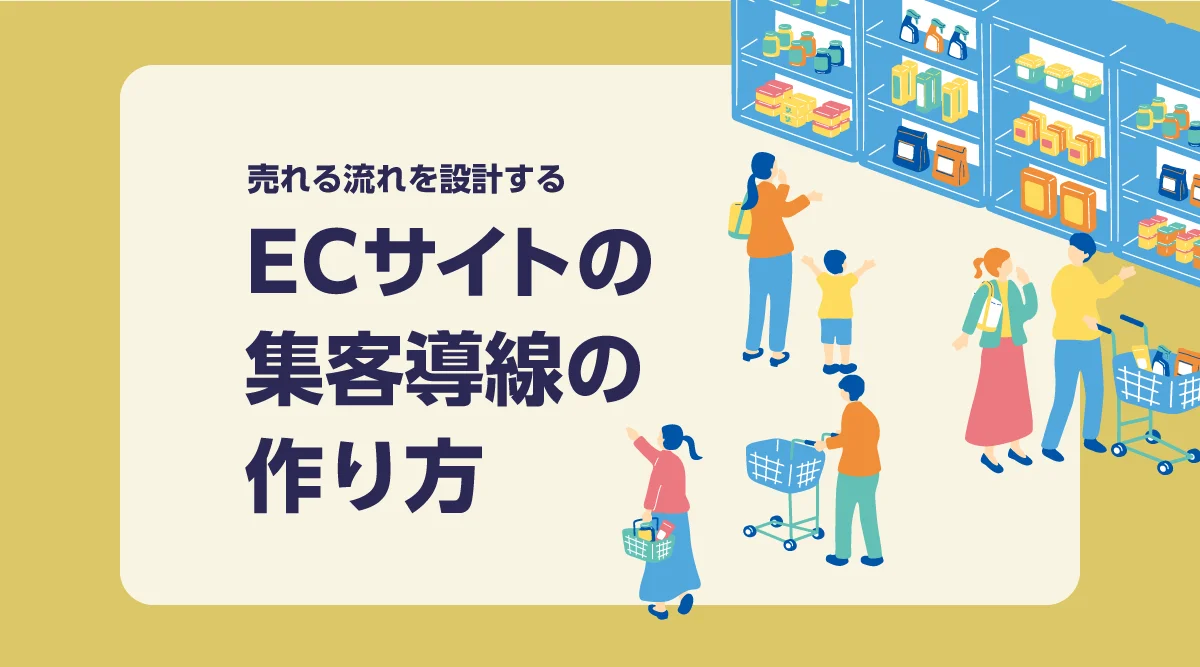
If your store isn’t performing as you’d hoped right now, the problem might not be with its features—it could be due to your “customer journey.” In this post, I’d like to discuss a simple yet crucial topic: how to connect the dots and create a “sales flow.”
If you’d like to get an overview of e-commerce sites, please start by reading this summary article on the types of e-commerce sites and how to choose one
Design Your E-Commerce Site’s Customer Acquisition Funnel Using This Flow

To attract customers to your e-commerce site and encourage them to make a purchase, it’s absolutely crucial to maintain an unbroken flow through the following stages:
Awareness → Interest → Trust → Comparison → Purchase → Repeat Business
If the path is interrupted at any single point, customers will leave before completing their purchase.
First, keep this flow in mind, and then take your time to carefully consider how to connect each step.
It’s Not Just About the E-Commerce Site—It’s About “Overall Strength”

First, there’s something I’d like to make clear. The success of an e-commerce site isn’t determined by any single “magic formula.”
- Even if your products are outstanding, if no one knows about them, it’s as if they don’t exist.
- Even if you attract tens of thousands of visitors through advertising, they’ll leave immediately if the site is difficult to use.
- Even if the site is beautiful, trust won’t be built unless the shop owner’s “personality” shines through.
“Great Products × Delivery Capability × A Site That Makes You Want to Buy × Human Warmth”
It’s only when all of these elements are connected by a single, thin thread that products will finally reach your customers. An e-commerce site is a convenient tool, but ultimately, I believe it’s a place that directly reflects the “overall strength” of your business.
First, think more deeply about your “purpose”
It goes without saying that you’re building it “to sell,” but try imagining what comes next. That’s where the path diverges.
- Do you want to build a loyal fan base, or is a one-time transaction enough?
- Are you dealing with businesses (B2B) or individuals (B2C)?
The more you wish for “anyone to buy it,” the less it will resonate with anyone.
For example, even when selling “delicious rice from Shiga,” are you aiming to “deliver the best breakfast to busy moms,” or to “offer peace of mind to those who miss the flavors of their hometown”? Narrowing down your target audience doesn’t mean leaving anyone behind. We believe it’s about raising a banner that says, “This is for you.”
Basic Navigation Flow of an E-Commerce Site (Big Picture)

Let’s break down the customer’s journey from discovering a product to purchasing it.
Step | Customer’s State | What the Store Should Do |
Awareness | Doesn’t know the store | Create an “opportunity” for them to discover the store |
Interest and Trust | What kind of store is this? | Gently convey the story and philosophy |
Comparison and Consideration | What sets it apart from others? | Delivering the “reasons” to choose and a sense of “peace of mind” |
Purchase | I’ll take this! | We’ll make your path to the checkout counter smooth and hassle-free |
Repeat | I want to shop there again | Designing the “Afterglow” of the Purchase |
If even one part of the path is overgrown with weeds, customers will get lost.
Customer Flow Path 1: Build Awareness (Create an Entry Point)
First, create a “hello” moment. While it’s better to have multiple entry points, choose the path that best suits your business. The key is to align “who you want to reach” with “where you’ll meet them.”
- SEO (Blog)
: A path of “assets” where you write articles that address concerns and interests, allowing people to find you through search. - Social
Media: The “ripples” path—conveying the excitement of the moment and connecting through shared emotions. - Advertising
The “shortcut” path: directly showing your message to the people who need it.
- Word-of-Mouth
The “Trust” path, born on the streets of Shiga through comments like, “That shop was great.”
Customer Acquisition Path #2: Building Interest and Trust (Getting People to Like You)
This is where you set yourself apart from other stores. Customers who’ve just discovered you don’t trust you yet.
- Product Story:
Why did you create this? - Concept:
What kind of scenery do you want to share with them? - Messages You Share
What are you thinking about as you run your business day to day?
Let me share a little of my own perspective here: “First and foremost, if a product isn’t good, it won’t sell.”
It may sound harsh, but there’s a limit to how much design can make a product seem “better than it really is.” Describe the genuine appeal of your masterpiece with honest words. That’s what leads to the strongest “interest” and “trust.”
Customer Journey Step 3: Designing the Path to Purchase (A Smooth Experience to the Checkout)
This is where technical skill is most crucial. You mustn’t let customers who’ve gone so far as to think, “I want this,” get frustrated by a clunky user experience.
- Clarity
of the Product Page Is the information customers want presented in the order they want it? - Call-to-Action (CTA)
Is the “Add to Cart” button easy to find?
- Addressing
Concerns: Shipping costs, delivery times, returns. Gently address minor concerns upfront. - Stripping Back Information Are you cramming too much text in by overthinking
search optimization? It’s important to strike a balance between thorough explanations and readability.
“The path to the cart is too long,” “There’s too much information—it’s overwhelming.”
In a brick-and-mortar store, these are the same as “I can’t find the register” or “The salesperson keeps talking to me the whole time.” Let’s recreate that pleasant customer experience on the screen.
“Abandoned carts”: the invisible loss of opportunity
In fact, looking at the average across all e-commerce sites, it’s said that only about 30% of customers who add items to their cart actually proceed to purchase. In other words, nearly 70% of customers—even though they thought “I want this”—disappear somewhere along the way before completing their purchase.
Many of the causes are “minor inconveniences” encountered just before checkout, such as shipping costs or the hassle of registering for an account. No matter how well the customer journeys in steps ① through ③ are designed, if customers stumble at this final step, all your previous efforts will go down the drain.
Customer Acquisition Path ④: Repeat Purchase Path (See You Again)
Surprisingly, what’s often overlooked even in the production process is what happens “after the purchase.” In business, the most important thing is how to maintain a long-term relationship with customers who have already made a purchase.
- A handwritten card or small flyer included in the package
the moment they open it. - A newsletter or LINE
message asking, “How’s it going since then?”—a non-pushy check-in. - After-sales support—sharing tips
on how to use the product or offering a helping hand when they run into trouble.
It’s not “buy and done”—it’s “the journey begins after the purchase.”
The spirit of “Sanpo-yoshi” (beneficial to all three parties), which businesspeople in Shiga have always cherished, remains unchanged even in the digital age.
“BASE” is also an option for payment processing
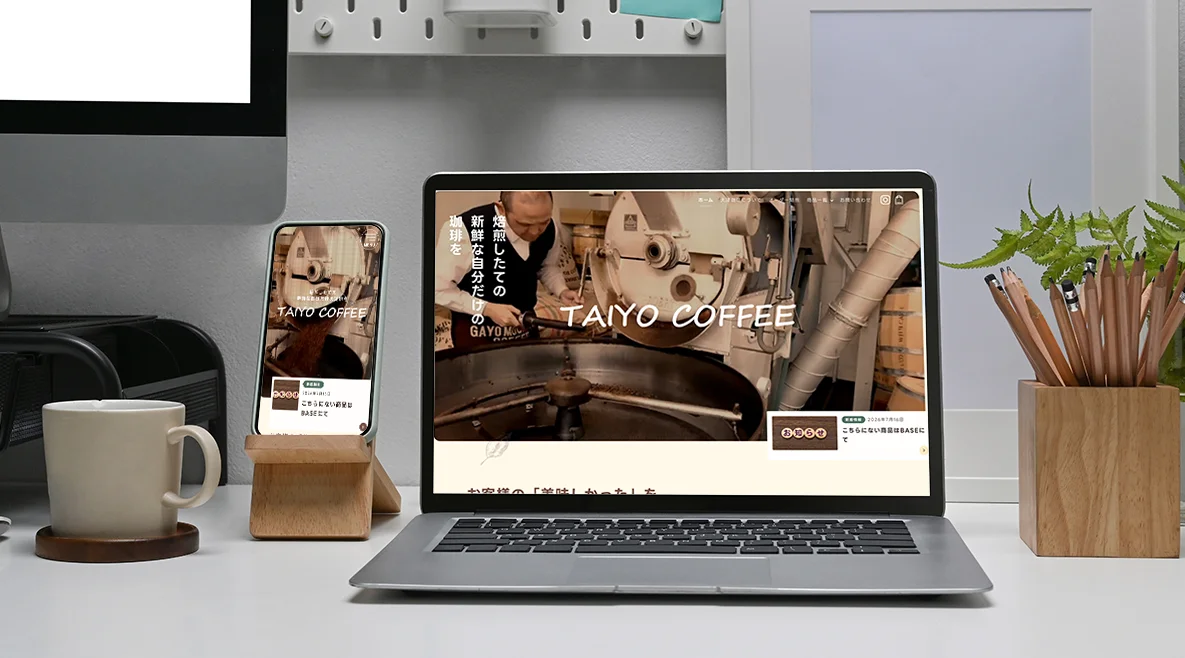
Building an e-commerce site’s payment and shopping cart functions from scratch can significantly increase both costs and development time. At Lake and Moon Design, as demonstrated by our case study with Taiyo Coffee, we also propose a setup that combines microCMS for content management with BASE for payment and shopping cart functionality.It’s a smart choice to focus on user flow design while entrusting payment security and costs to a proven service.
Summary from a Development Perspective: Design Over Tools
An e-commerce site won’t sell just by being built.
Only by designing the user flow does it become a “system that drives sales.”
It’s not about which tools you use, but how you create this flow.
I believe that is the essence of building a store that stands the test of time.
No matter how high-quality a brush you use, you can’t paint a good picture without a sketch.
Building a site without planning the user journey is like setting out on a journey without a map.
First, where do your customers encounter your brand, and what’s their mindset as they head to checkout? Why not take your time and sketch out that journey with us?
If you’d like to explore which tools are right for you, please check out our guide to different types of tools here.
 Contact Form


 Related Articles