
Hello. This is Lake and Moon Design.
[Design Edition] In our post on “What Makes a Good Website,” we shared a thought-provoking point: “A website can’t be called ‘good’ just because it looks pretty.” We explained that design is, in fact, the “planning” required to achieve a specific goal.
So, once the design is finalized and we move on to the “implementation” stage—where we actually build the site on the web through coding and system development—how exactly do we evaluate what makes a website truly “good”?
From our perspective on the production side, the answer is actually quite simple. We believe it comes down to “two aspects of usability.” These are “ease of use for the user” on the front end, and “ease of use for the web manager” who’s working hard behind the scenes.
What Does “User-Friendly” Mean? (Front-End Design)

First, let’s look at it from the perspective of the “users (customers)” who visit the website.
In a nutshell, I think ease of use for users means “not making them think.” The moment someone stops and wonders, “Huh, how do I use this?” they unconsciously feel stressed and will quickly move on.
Specifically, it comes down to a series of small details.
“No confusion” about where to look
A design where first-time visitors can intuitively realize in an instant, “Ah, what I’m looking for is right here.” By calculating eye movement, the button you want them to click next naturally catches their eye, as if it had been there all along. It’s important to organize the navigation in this way.Making users spend even a single second wondering, “Where should I click?” is actually very unfriendly.
“Reaching the Goal Immediately”
Organize information properly so users can reach their goal (the target page) by the shortest route. Keeping them waiting with excessive visual flourishes or making them wander aimlessly through pages might be a bit self-indulgent.Users should be able to reach the information they want as effortlessly as picking up their favorite book. That “smoothness” is the ultimate form of hospitality on a website.
“Stress-Free” Navigation
The speed at which pages load instantly, or how easy it is to tap buttons on a smartphone. It’s something you can’t see, but you feel it—that “somehow comfortable” sensation when you interact with the site. Having to wait several seconds for a page to load, or buttons placed out of reach. It’s essential to thoroughly eliminate these small “pains” and deliver a stress-free experience.
What Does “User-Friendly” Mean for Web Managers? (Internal Design)
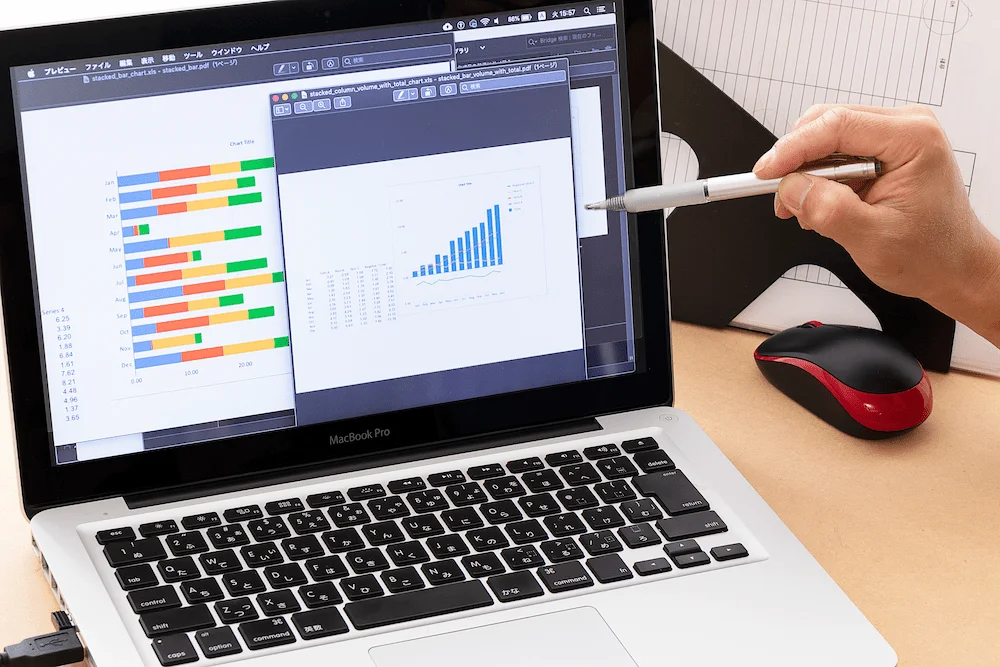
And then there’s the perspective of the “web manager (you)” who’s responsible for maintaining and growing the website.
No matter how cool the front end looks, it’s a bit disappointing if the back end is too complex for you to make any changes yourself, isn’t it? That’s where a CMS (Content Management System)—which allows you to update the site without specialized knowledge—becomes essential.
A well-implemented website is built this way.
An “easy-to-update structure” that’s intuitive to use
When you open the admin panel, you should be able to tell at a glance, “I just need to enter text here and place a photo there.” Even if you’re not a professional engineer, you can share the day’s vibe just as naturally as you’d post on social media. That “intuitive feel” is absolutely essential for keeping your website “alive.”
A “break-proof” layout
The moment you add a little text or quickly insert a tall photo, the entire page’s balance comes crashing down. That makes you too afraid to update the site, doesn’t it? No matter what data you enter, the system automatically adjusts it to look “just right” and preserves the beauty of the design. It’s crucial to build a “flexible yet sturdy foundation” like this.
“Simple Operational Rules” That Avoid Reliance on Specific Individuals
Saying, “If that person leaves, no one else will be able to update the site,” is a very dangerous situation. Instead of relying entirely on a specific individual, design the system to be so simple that anyone can take over seamlessly—without needing a manual. A website isn’t something you just build and forget; it’s a place you “live in” every day from that point on, so you want to make sure anyone can walk right in.
Selecting a CMS or Tool: Which One Fits “Your Service”?
There’s more than one tool available for building websites today. Broadly speaking, there are three main categories: “WordPress,” “microCMS,” and “no-code platforms” (such as STUDIO). Rather than focusing on which one is “better,” I think it’s best to choose based on “how you want to grow your service.”
Comparison Criteria | No-Code (STUDIO, etc.) | ||
Architecture | Server-Integrated | Headless (separate display) type | Fully Cloud-Based |
Strengths | Extensive Features, Media Management | Unmatched Speed, Flexible Design | Intuitive editing, easy management |
Security | Appropriate security measures and updates are essential | Extremely robust | Leave it to the service provider |
Maintenance and Management | Server and maintenance required | No server management required | No server or maintenance required |
Ideal for | Want to post frequently every day | Want to perfect a unique brand experience | Want to keep operations as simple as possible |
If you want to actively grow your site yourself, choose “WordPress”
Whether you’re sharing staff updates daily or constantly adding new project examples from the field, WordPress is the perfect choice for businesses that want to treat their website as a “growing media platform” and nurture it daily—just like you would a physical store. Its flexibility—which makes it easy to add features later using plugins—is another reason it has remained a long-time favorite.
If you’re focused on quality and security, choose “microCMS”
“We don’t want to make customers wait even a single second for a page to load.” Or perhaps you’re a clinic that prioritizes security above all else, or a creative professional who won’t compromise your brand’s image by even a millimeter. If “speed,” “security,” and an “unwavering brand identity” are your top priorities, microCMS is the perfect fit.
If you want to keep things “easy” yet polished, choose “no-code”
“I don’t really understand complicated stuff like server management, but I want to be particular about the design.” For people like this, no-code tools such as STUDIO are a reliable ally.Since you can make changes as intuitively as typing text directly onto a design mockup, this approach presents the lowest psychological barrier for web managers. It’s a very user-friendly option for small teams or businesses that can’t allocate resources to ongoing maintenance.
A Common Mistake: “Unbalanced Implementation”
If you favor either the “front-end people” or the “back-end people” too much, your website will end up feeling a bit stifling.
“Front-End Bias”: Focusing Only on Appearance
In an effort to entertain visitors, people often end up chasing nothing but cool animations and flashy effects. While I completely understand that sentiment, the result can be a back-end that becomes a tangled mess.Once the site goes live, you might find yourself in the unfortunate situation where “we can’t even edit a single character in the announcements section ourselves.” Sacrificing the website’s functionality for visual appeal is putting the cart before the horse.
“Overemphasis on the Back End” Driven Solely by Ease of Management
Conversely, what happens if the desire to “make updates as easy as possible for ourselves” becomes too strong? Everything gets forced into a rigid mold, resulting in a website that feels as lifeless as a document. While the information is undoubtedly well-organized, the “human warmth” and “charm” that the company should naturally possess disappear completely.This results in a site that fails to move anyone’s heart.
Key Consideration: “Is the code robust enough to function even if the production company changes?”
Finally, let’s talk about something a bit more serious.
The aspect of implementation where we strive to be most conscientious is “back-end quality.”
This means asking, “Is it built in a way that another engineer can properly take over and maintain it?”
I think it’s unprofessional to leave behind “cryptic code that only the person who wrote it can understand” (code that’s tied to a specific individual). After all, it’s the client’s valuable asset. We are committed to writing clean, well-organized code that anyone can look at and say, “Ah, so that’s what they intended.”
So that even if someone else works on that website years from now, it will continue to thrive alongside your business.
A good website is one with a “structure that doesn’t end once it’s built”
A good website isn’t just about looking pretty.
It’s a place where no one—whether visitors on the front end or those maintaining it behind the scenes—gets lost.
And above all, it must have a “structure that doesn’t break even after continuous updates—it’s not just ‘build and forget.’” We believe that is the absolute prerequisite for a great website.
If you’re feeling “somewhat worn out” by managing your current website, it might not be the design’s fault—the cause could lie in the invisible “back-end architecture.”
 Contact Form


 Related Articles