
Hello. This is Lake and Moon Design.
“We want to deliver our products nationwide, so we’re going to build an e-commerce site too.” If that’s what you’re thinking right now, please pause for a moment and let me share something with you.
For those considering building an e-commerce site, while the mechanism for selling products online is certainly wonderful, it’s not a “website that sells itself just by being built.” Just like with a brick-and-mortar store, you need to decide where to set up shop and how to attract customers. Your initial choice of platform—how you “set up shop”—will significantly shape your future success.
To put it simply, if you’re planning to launch an e-commerce site, we recommend using the following as a guideline: “Choose BASE if you want to start small and easily,” and “Choose Shopify if you want to grow it into a full-fledged business.”
This article serves as a “starting map” for anyone hesitating to launch an e-commerce site. We’ll explain the big picture in an easy-to-understand way—from the role of e-commerce sites to the wide variety of systems available, and even how we typically build e-commerce sites for our clients.
Why Build an E-commerce Site? Explaining the Benefits

The main reason is simple: “to break down the barriers of time and distance.”
Physical stores have limitations—such as business hours and the fact that customers must physically come to the store. However, with an e-commerce site, you can deliver products to customers whenever they want them—even at night when the store is closed or on days off.
It’s absolutely impossible for humans to “work nonstop,” but by having an e-commerce site—this “second point of contact”—we can take proper breaks while still allowing customers far away to enjoy a pleasant shopping experience.
For example, products from a small shop operating here in Shiga can be easily delivered to customers in Hokkaido, Okinawa, or even overseas. This is a powerful advantage that fundamentally expands the possibilities of our business.
How to Utilize an E-Commerce Site
The role of an e-commerce site isn’t limited to “selling to new customers.” In fact, when we look at the field, there are many companies achieving results by using it in the following ways.
- Using
It as a Catalog or Brand Website: By deeply conveying the unique features and stories behind products, you create incentives for customers to visit your physical store. - Follow-Up
with Existing Customers: Guide customers who have visited the store at least once to use the site as a platform for “sending gifts to people far away” or making “regular repeat purchases.” - Test Marketing: New products are first sold exclusively
online to gauge customer reaction before a full-scale launch.
Stores that utilize their e-commerce sites not just as “mere sales platforms” but as “hubs for building long-term relationships with customers” are, without a doubt, the strongest. We’ve also covered the “real reason why e-commerce sites aren’t selling—is it because they’ve become ‘mere sales platforms’?” in detail in a separate article.
Before Choosing a System: “Planning and Marketing” That Make or Break Your Success
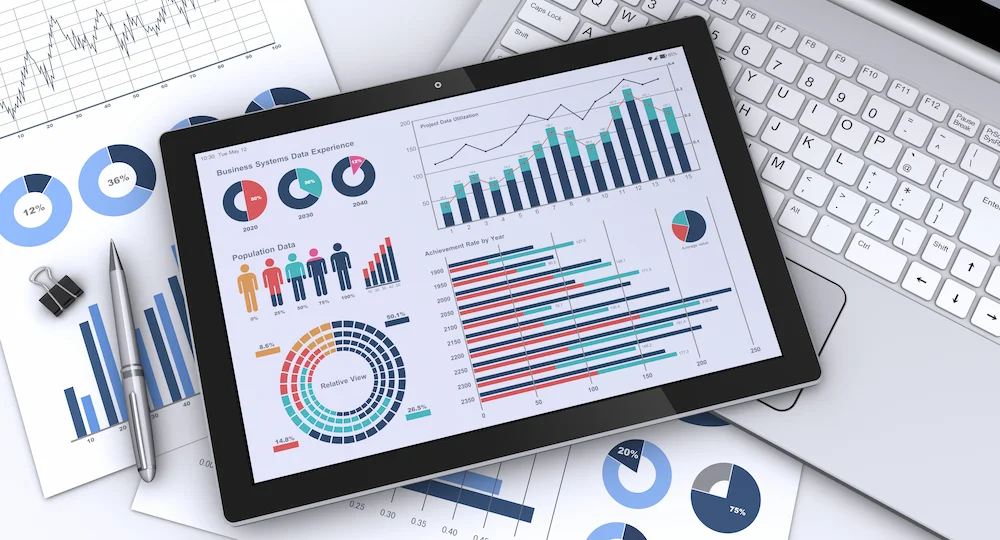
Before you agonize over “which system (shopping cart) to choose,” there’s actually one more step you absolutely must not skip. That is laying the groundwork for planning and marketing—specifically, determining “who you’re targeting, what you’re offering, and how you’ll deliver it.”
When opening a brick-and-mortar store, you wouldn’t start by deciding on the type of cash register or shelf layout, would you? You’d first think about “what kind of people you want to attract,” “what aspects of your products you want them to know,” and “how to get the word out about your store.” An e-commerce site is exactly the same.
- Who are you reaching (target audience)
? Is it your regular customers, or people across the country you haven’t met yet? - Why should they buy from us? (Concept)
Is it the price, the quality, or a unique story you can only find here? - How will you
attract customers? Will you build a following on Instagram, or will you drive traffic through search engines?
Without a clear “store concept and customer acquisition strategy,” no matter how impressive the system you implement, it’s like building a store all alone in the middle of a deserted mountain.
That’s precisely why “a website doesn’t sell itself just because it’s built.” The correct order for choosing a system is to first solidify your “how to sell” strategy and then select the solution that best fits it. Please also be sure to refer to our guidance on creating specific customer acquisition pathways, such as driving traffic from Instagram or search engines.
When thinking about “how to sell,” it’s easy to get caught up in chasing short-term “sales” alone. However, e-commerce sites that truly stand the test of time are carefully designed to address “why and how sales were made” and “how to build relationships after a sale.” To ensure you don’t stop at simply choosing a system, I discuss the essential “design of the sales process” in detail in the article below.
Comparing Types of E-Commerce Sites and Leading Services

Once you have a general idea of “how to sell,” it’s time to compare systems. Here, I’ll categorize them into four main types and explain the characteristics of each from a practical, on-the-ground perspective.
① Mall-Type (Opening a Store in a Large Shopping Mall)
This method involves joining a massive platform that already has strong customer traffic as a “tenant.”
- Rakuten Ichiba
: Overwhelming customer traffic. However, setup fees and commissions are high, and success often comes down to financial endurance. - Amazon
: Low barrier to entry and robust fulfillment services. However, it can be difficult to convey your brand’s unique identity.
② SaaS Model (Highly Scalable, State-of-the-Art Standalone Store)
This is the current global standard: renting a cloud-based system to create your own dedicated, independent store.
- Shopify:
Currently the top recommendation if you’re serious about growing your e-commerce business. Its greatest strength is the ability to start small and gradually expand functionality (by adding apps) as sales grow.
③ ASP Model (Rental Stores That Are Easy to Set Up)
This method of creating an independent store focuses even more on “ease of use” than the SaaS model.
- Color Me Shop
: A long-established Japanese platform. It offers a good balance of features and cost, and is easy to customize. - STORES / BASE
: The two major players that let you get started easily with no initial or monthly fees. They’re ideal for test sales or if you already have a following on social media.
④ CMS Model (Buying Land and Building a House from Scratch) *Caution Required*
This method involves installing the system on your own server.
- EC-CUBE: A
Japanese-developed e-commerce system. It allows for thorough customization down to the finest details to match your company’s business workflow. - WordPress (WooCommerce, etc.)
This method involves adding e-commerce plugins to WordPress, which is familiar from blogs and corporate websites.
Risks We Want to Highlight from Our Experience
While the appeal of the CMS model is its versatility, your company is solely responsible for all security measures, maintenance, and updates. Due to the high costs and risks associated with maintenance and management, we do not currently recommend this approach.
We’ve covered the topic of “What platform to use for your e-commerce site” in detail in a separate article.
Related Articles
What if you’re choosing based on cost?
The “cost structure” varies significantly depending on the type of system.
BASE・STORES
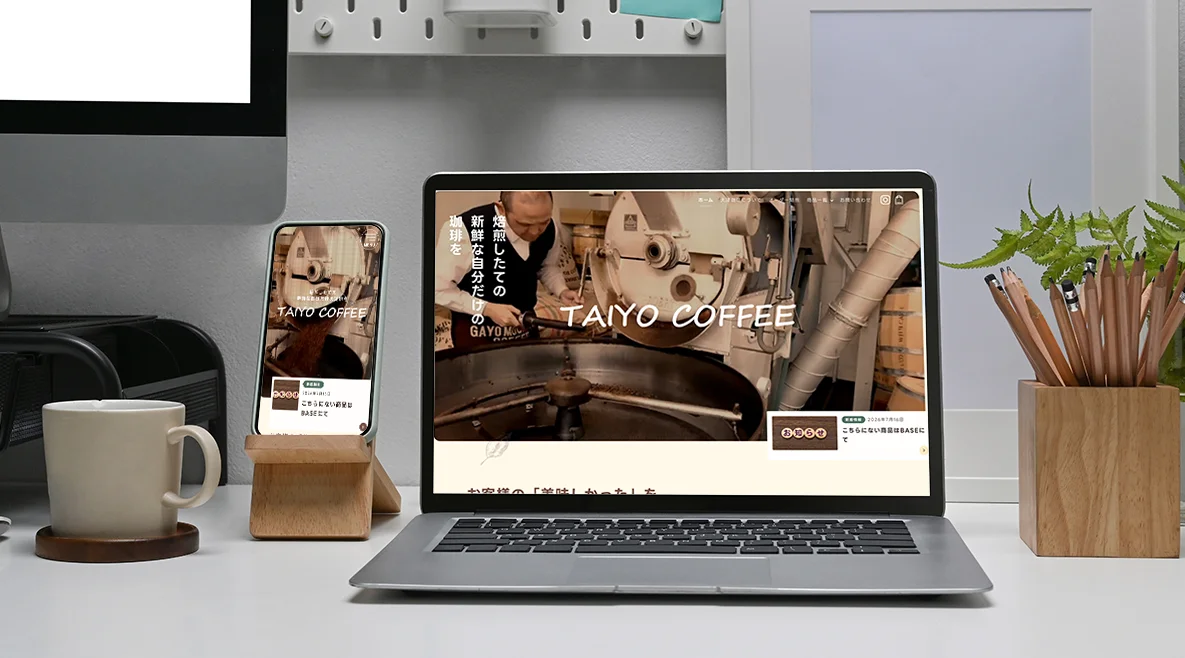
Initial setup fees and monthly fixed costs are generally $0. Instead, payment processing fees are charged only on sales, so the biggest appeal is that “you don’t pay anything until you make a sale.” This is why they’re perfect for test sales.
Color Me Shop
While there is a fixed monthly fee, the payment processing fees are relatively low. This makes it suitable for those who have a reasonable expectation of sales.
Shopify
In addition to the monthly fixed fee, costs increase every time you add an “app” to expand functionality. However, this also provides unlimited scalability to grow your business as it expands.
Rakuten Ichiba
With a combination of store setup fees, system usage fees, and monthly fixed costs, the overall cost tends to be higher than other platforms. However, this also includes the “advertising costs” associated with the marketplace’s ability to attract customers.
CMS-based (EC-CUBE, WordPress)
While the cost of the system itself is kept low, your company is fully responsible for the time and expenses associated with security measures and maintenance.
If you choose a platform based solely on low initial costs, you’ll likely find later that “fees are higher than expected” or “you can’t expand even if you want to.” We recommend making your choice by considering both your current sales volume and where you want to be in a few years.
Our Recommended Approach to Building an E-Commerce Site
So, if you were to actually commission us at “Lake and Moon Design,” how would we go about building your e-commerce site? Our approach is very simple.
“We use a secure, optimal off-the-shelf system, and we focus on ‘building a store that sells’ (planning and marketing).”
We don’t develop systems from scratch or take high-risk approaches. Currently, our two main recommendations are “Shopify” and “Color Me Shop.”
We trust these platforms the most because they offer high design flexibility, making it easy to express your brand’s unique identity, and—most importantly—because their features can be expanded as your business grows, making them “systems we can nurture together over the long term.” (Of course, we’ll also be honest with you if we think “BASE is the best option right now since you’re just testing the waters.”)
With that in mind, we focus our efforts on the following areas:
- Design
that conveys your brand’s identity We ensure the design firmly expresses the unique “essence” of your brand without giving off a generic, off-the-shelf feel. - A seamless, comfortable user journey
that encourages impulse purchases: We ensure “usability (UI/UX)” by making it easy to find what you’re looking for and navigate stress-free to the purchase button. - Ongoing operational support
that goes beyond launch: The real work begins once the store opens. We’ll be right by your side, ready to address operational concerns—such as “I don’t know how to add products” or “How can I get more people to see my store?”—in a way that feels approachable and accessible.
Our approach isn’t about “selling a system”—it’s about “laying the groundwork for your business to thrive.” That’s our philosophy.
Let’s Build Your Store Together
We’ve discussed various systems and how to choose them so far, but let me add one final point.
The success of an e-commerce site isn’t determined by the “system” alone. First and foremost, your products must clearly convey their value. Furthermore, your daily “store philosophy”—including how you handle inquiries, shipping, and after-sales support—directly impacts your sales.
No matter how visually polished an e-commerce site may be, if the content and customer service aren’t up to par, it will almost always result in a one-time purchase. Conversely, the more a store genuinely focuses on its products and customer service, the more its e-commerce site will grow into a long-term asset.
There is no “one right answer” when choosing an e-commerce platform. You need to consider the products you sell, your current staffing situation, and “where you want to be in a few years.” By weighing these factors together, you can select the option that best fits your needs.
“Which option is right for our company?”
If you’re feeling uncertain, please feel free to share your current situation with us exactly as it is. We absolutely will not try to push you into buying an expensive system.
Feel free to reach out just to gather information, or even if you’re simply trying to figure out whether you should handle it yourself or hire a professional—we’d be happy to help. We’d love to have a casual conversation even if you’re just at the stage of asking, “Can you do this?”
This isn’t a sales pitch—let’s hold a “strategy session” to figure out how to take your business nationwide.
Your customers, you, and us—let’s work together to create a place where everyone is satisfied and can move forward.
 Contact Form


 Related Articles