
Hello, this is Lake and Moon Design.
We often receive inquiries from owners who are preparing to open a vacation rental or guesthouse—or who are already in business but have started thinking, “I want to promote my business more effectively online”—asking, “Do I really need a website? I’m already registered with OTAs like Airbnb and Jalan, so isn’t a long, vertical landing page enough?”
To put it simply, the right answer depends on the business. However, vacation rentals and guesthouses have unique circumstances specific to the lodging industry that differ somewhat from those of restaurants or beauty salons.
So, what criteria should you use to make your decision? While budget and the effort required to update the site are certainly important, there’s a more fundamental, crucial criterion that comes first.
That is, “What kind of guests stay at your property, and what are they looking for?”
In this article, I’d like to share an approach for when you’re wondering, “Which one is the best fit for my property?”—one that focuses on “the faces of your guests” rather than just numbers or systems.
Visualize “Your Guests’ Faces” Before Thinking About Budget
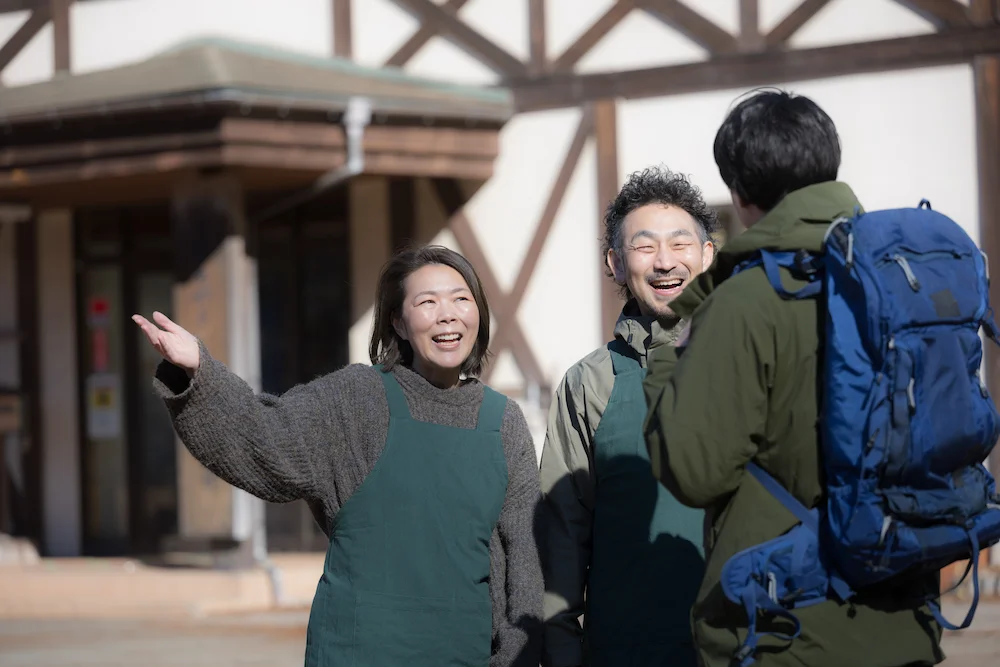
For example, even among “vacation rentals and guesthouses,” the time and experiences guests are seeking can be completely different.
Accommodation A: Backpackers who are quickly looking for a place to stay for the night while traveling. As long as there’s availability, it’s clean, and the location is convenient, that’s all they need.
Accommodation B: A couple visiting potential locations for a move to the countryside. They research the owner’s personality, their passion for local ingredients, and even the origin of the place’s name before contacting the accommodation directly when they decide, “This is the one.”
Guests at Accommodation A are looking for quick information: “availability, price, and location.” On the other hand, guests at Accommodation B ask, “Who runs the place? What’s breakfast like? What’s nearby?”—they carefully research whether it’s a place they can trust with their precious night before making a reservation.
A single-page landing page (LP) excels at “giving them a quick nudge.” A website excels at “carefully conveying your vision to put guests at ease.”
What kind of people come to stay at your inn?
Why do you need a website when there are OTAs (online travel agencies)?
Unlike restaurants, vacation rentals and guesthouses have the option of using OTAs (online travel agencies) like Airbnb, Jalan, and Booking.com. It’s natural to think, “I’m already listed on an OTA, so do I really need a website?”
However, there are three barriers to using OTAs.
① Commission fees
Bookings made through OTAs incur platform fees. For guesthouses and vacation rentals where the average guest spend isn’t high, these fees can add up over time. As direct bookings through your website increase, more revenue stays in your pocket.
② You can’t fully convey your property’s unique character
On OTA pages, all accommodations are listed using the same template. The story behind the opening, the owner’s personality, and their love for the local community—there are inherent limits to conveying that “human touch” of your property.
③ Relying on OTAs for Guest Relationships
It’s only natural for guests who book through an OTA to use the same platform for their next visit. This means there’s still no place where they can connect directly with your property.
Your website is your inn’s “own space”—a place to gradually break free from this dependence on OTAs.
Where are your guests on social media? (Characteristics by age and gender)
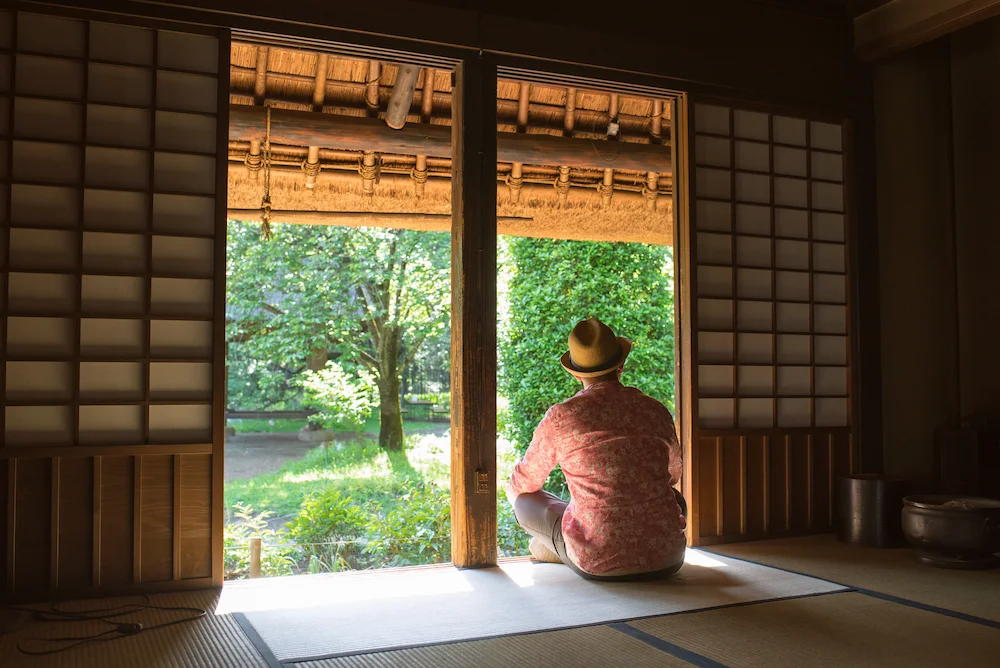
Looking for a place to stay isn’t just about “searching.” Guests might be drawn to a photo that catches their eye, or discover your property for the first time through someone else’s post. That’s why it’s so important to consider where your guests spend their time.
Once you have a clear picture of the guests you want to attract, the next step is to consider where they typically spend their time—specifically, which social media platforms they use. The goal is to create a flow that guides them from social media to your landing page or website.
Types of Social Media | Main Age Groups | Gender Ratio Trends | Characteristics and Atmosphere When Searching for Accommodations |
|---|---|---|---|
20s–40s | Slightly more women | Users search visually for room ambiance, breakfast, and location. Traditional Japanese houses and a handmade feel tend to resonate well. | |
Teens to 20s | Nearly equal split between men and women | Videos create an impulse to think, “I want to stay here!” This platform is also effective for reaching international travelers. | |
20s–40s | Slightly more men | Word-of-mouth recommendations like “This place was great” spread easily. The owner’s down-to-earth, everyday posts resonate with users. | |
Ages 40–60 | Slightly more men | Word-of-mouth within local communities and relocation-related groups. Effective for reaching those considering long-term stays or relocation. |
For example, if your goal is to “attract women in their 20s and 30s to experience the charm of a traditional Japanese house and a homemade breakfast,” a seamless flow from Instagram to your landing page—where they can quickly make a reservation—works beautifully.
Conversely, if your goal is “to invite couples in their 40s and older to leisurely savor the local lifestyle and food culture,” it will likely feel more natural to have them visit your website via Facebook or Google search and take their time reading the story behind your lodging.
Comparison by Type: Accommodations Suited for a Landing Page vs. Those Suited for a Website
We’ve compiled a table to illustrate, in a bit more detail, the “ideal web format for your inn” based on your guests’ profiles and the social media platforms they use.
Comparison Criteria | Accommodations Suited for a Landing Page (LP) | Accommodations Suited for a Full Website |
|---|---|---|
Guest Demographics | Primarily trend-conscious people in their teens through 30s | People in their 30s and older who want to take their time choosing accommodations |
Desired Experience | A quick stay at a “trendy guesthouse” | Choosing based on “the owner’s vision, local character, and atmosphere” |
Entry Points for Attracting Guests | Traffic from Instagram, TikTok, and OTAs | Careful searches, such as “region name + traditional Japanese house inn” |
The Role of the Website | Guide guests to “Booking” as quickly as possible without causing confusion | Share the inn’s story and foster deep “empathy” |
Relationship with OTAs | Can thrive even when OTA bookings are the primary source | Cultivating direct bookings to reduce dependence on OTAs |
Unlike restaurants, guests in the lodging industry “entrust their night” to your property, so they conduct very thorough research before booking. That’s precisely why a website that thoroughly conveys your unique vision will strengthen your property’s appeal in the long run.
Is a content management system (such as microCMS) necessary?
We often receive requests like, “We want to be able to update announcements ourselves,” but depending on the situation on the ground, choosing not to include this feature is also a valid option.
Scenarios | When it’s better to include an update feature | When it’s not necessary to include it |
|---|---|---|
Operational Situation | Frequent updates to seasonal plans or information on local events | You’re too busy with check-ins and cleaning to find time for website updates |
Purpose of Updates | We want to keep accommodation plans and local information up-to-date | Basic information remains constant, and daily updates are handled sufficiently via social media |
If we implement a sophisticated system only to find that, in the end, we’re too busy and “nobody ends up using it…,” it’s better not to implement a system at all and leave daily posts to familiar platforms like Instagram and X. I believe this kind of “subtraction” is also an important part of the design that helps keep the inn’s atmosphere pristine.
Even if you do decide to implement an update feature, it doesn’t necessarily have to be a heavy-duty platform like WordPress. Running a guesthouse is busier than you might imagine.There are times when “being able to quickly update today’s announcement without hesitation” is more important than “learning how to use a complicated admin panel.” For tasks like updating announcements or accommodation plans, there’s also the option of “microCMS,” which is much lighter and runs smoothly. It offers a user-friendly experience that on-site owners can use without hesitation, and we at Lake and Moon Design often recommend it.
Do Vacation Rentals and Guesthouses Need a Website? Lake and Moon Design’s Perspective
When searching for a place to stay, the number of guests finding accommodations through Google Maps (Google Business Profile) has really increased recently. While we’ve discussed how to utilize Google Business Profile (MEO strategies) in this article, the basic approach is to set up a website or landing page (LP) that serves as an “official information hub” accessible via Maps.
With that in mind, here is our simple conclusion:
- If you want visitors coming from social media or OTAs to take a single action (making a reservation), use a “landing page.”
- If you want visitors coming from search results to fall in love with the entire atmosphere of your inn, use a “website.”
At Lake and Moon Design, rather than chasing fleeting viral trends or resorting to aggressive sales tactics, we prioritize attracting customers by providing high-quality information and “waiting” for them to find us through search. That’s why we often propose websites that carefully convey the space’s ambiance and even the owner’s personal touch.
What matters most is “how you want guests to find you.”
For vacation rentals and guesthouses, the most important thing is something even simpler than “how to build it” or “what to build.”
It’s about “what kind of guests do you want to walk through your door, and in what frame of mind?” Once that vision is clear, the “right online presence” for your lodging will naturally fall into place.
“What kind of website would best suit the guests at my property?” If you find yourself wondering this, please don’t try to figure it out on your own—feel free to reach out to us so we can help you sort through your thoughts.
 Contact Form


 Related Articles